CA: WCRI Report Shows Medical Costs Are Not the Problem
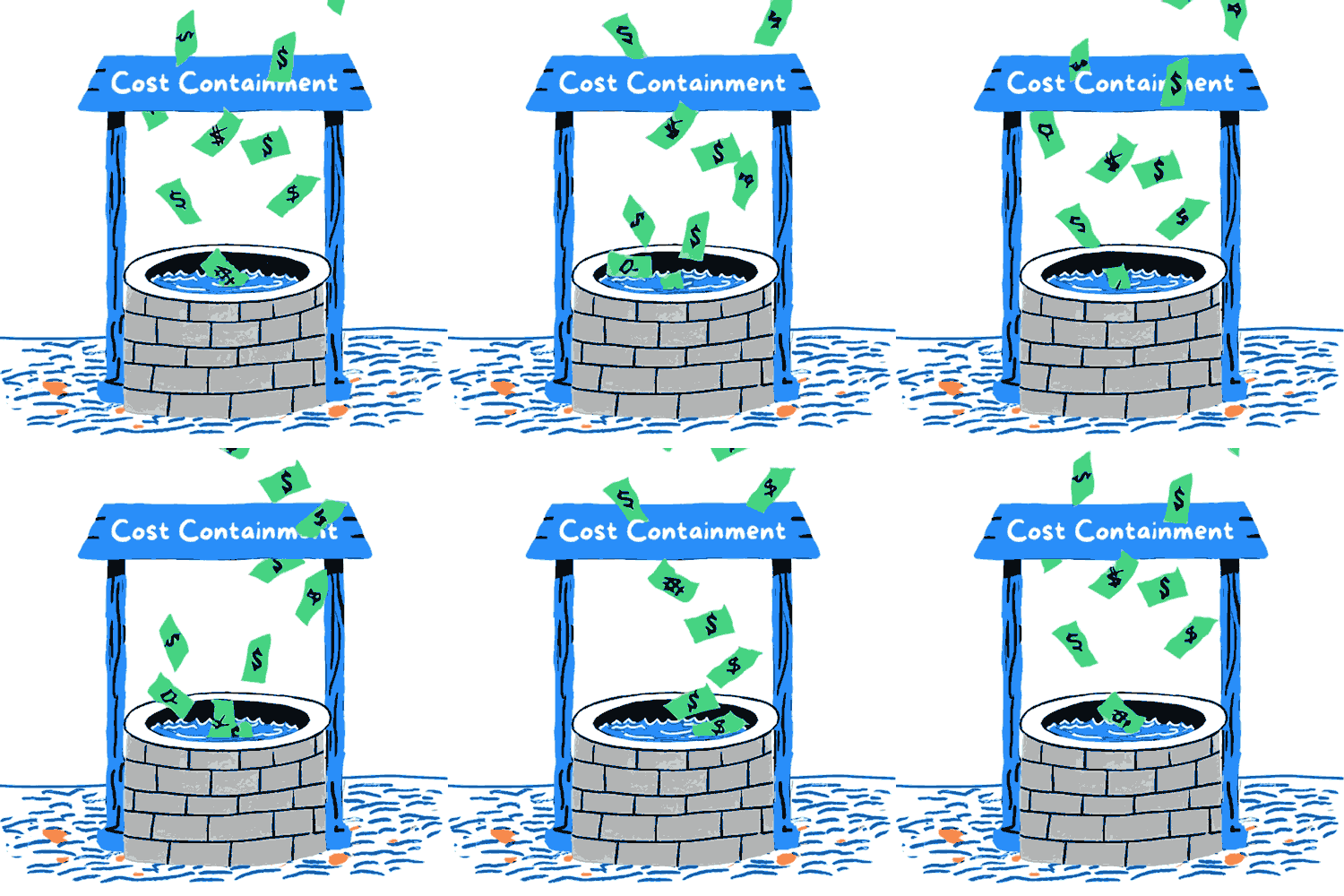
A report on workers’ comp claims costs from the Workers’ Compensation Research Institute (WCRI) puts hard data to a trend that should alarm all California employers whose premiums are set to rise (again) this year.
California employers pay comp premiums to ensure their employees’ medical care and indemnity benefits in the event of a work injury. However, WCRI data strongly suggest that non-medical, administrative and legal expenses are exceptionally high in California. At the same time, payments for actual medical care are low compared to the rest of the nation.
A shocking amount of employer premiums are funding non-medical expenses such as litigation, Utilization Review (UR), Medical-Legal disputes, bill review, and network services. The WCRI notes that:
- At $11,045 per claim, Benefit Delivery Expenses (BDE), which include Medical Cost Containment (MCC) measures, litigation, and Medical-Legal services, are 46% above the median of $7,558.
- MCC costs specifically (e.g., bill review, network services, and other measures designed to decrease spending on medical care) account for 25% of California’s “medical-related” costs per claim, the highest among the 18 states the WCRI studied.
According to the WCRI, some of these non-medical expenses have downstream effects that may further increase the overall cost of claims, e.g., mandatory UR, which daisyNews has argued impedes care and increases the time workers stay on disability.
Meanwhile, the cost of medical treatment is significantly lower in California than in many other states. For claims with more than seven days of lost time, the WCRI puts medical payments per claim at 31% lower than the median state, thanks to one of the stingiest workers’ comp fee schedules in the nation.
These data tell a story of out-of-control administrative and legal costs that make up far too large a share of the money employers invest in comp coverage. The result is longer, more expensive claims that ultimately lead to higher premiums despite the low, relatively stable cost of actually treating injured workers.
Make no mistake: there are beneficiaries to this extreme (and arguably optional) inefficiency. Vendors providing services such as claims management, network services, UR, and bill review, flush with funding from private equity firms, are cashing in on this dysfunction.
Medical Costs in CA Comp: Nothing Special
While both medical and indemnity costs have risen in California over the last several years, the growth in these benefits for workers is generally typical of the states the WCRI studied.
As the WCRI’s 2026 CompScope Benchmarks for California report states, recent annual growth in medical payments, including a 6% bump from 2023 to 2025 for year-old claims with more than seven days of lost time, does not make California stand out (emphasis ours):
“Medical payments per claim with more than seven days of lost time in California grew 6 percent per year from 2023 to 2025 for claims at 12 months of experience, including a 7 percent increase in 2025. The 6 percent average annual increase in California from 2023 to 2025 was fairly typical of the study states.”
As the chart in the report below shows, the 4% growth in medical payments per claim in California from 2022 to 2025 (also for year-old claims with more than seven days of lost time) is not notable compared to other states. In fact, California had the sixth-slowest growth rate in medical payments.
According to the WCRI, one key driver of medical costs in California comp is the duration of claims. California has a significantly higher proportion of claims with more than seven days of lost time (34%, compared to the median of 25%).
However, the actual medical payments issued during those long claims were drastically lower than the median state:
“For claims with more than seven days of lost time, medical payments per claim in California were lower than typical, at 31 percent lower than the median state.”
The WCRI also notes that “Prices paid for professional services [in California] were lower compared with other study states, which reflects reimbursement regulations. California regulates prices paid for medical services through its Official Medical Fee Schedule...” This echoes an earlier WCRI report that found that California health care providers are among the lowest-paid in the nation for comp treatment.
The Narrative in the Numbers
What are California workers’ comp stakeholders, including legislators, regulators, employers, providers, and injured workers, to make of this report?
In our view, the story is straightforward: California comp is burdened with overwhelmingly high legal, administrative, and bureaucratic costs. Employers are pouring more and more money into the system, yet far too little of it translates into actual medical care for injured workers.
In fact, California health care providers are underpaid by national standards, according to the WCRI’s previous analysis of fee schedule rates, which doesn’t even account for the effects of rampant discounting practices (both legal and illegal).
Meanwhile, private equity is dumping billions into companies that generate profits from MCC measures and other BDE, as California employers face rising workers’ comp premiums, again.
Dispute bogus denials and reductions in seconds with daisyBill. Click below to see how:
BILL BETTER: DAISYBILL




DaisyBill provides content as an insightful service to its readers and clients. It does not offer legal advice and cannot guarantee the accuracy or suitability of its content for a particular purpose.
.gif)