Network Mayhem: Sedgwick & Apricus Stiff CA Provider
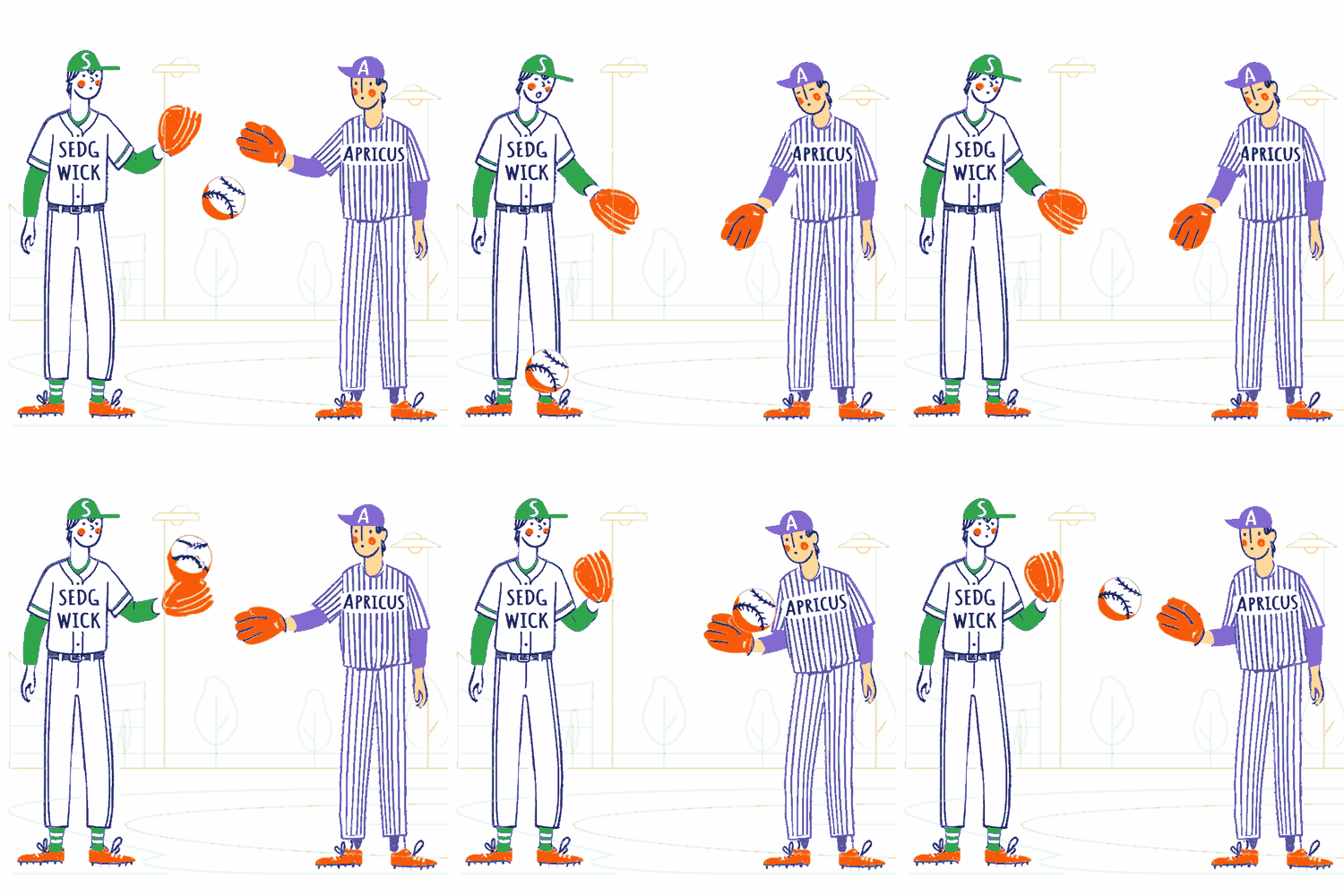
A California provider received no reimbursement for treating an injured worker, with no clear path to payment, thanks to an apparent accounting dispute between Third-Party Administrator (TPA) Sedgwick Claims Management Services, Inc. and network payer Apricus.
Worse, Apricus apparently expects the provider to resolve the dispute, which is not within the provider’s power or realm of responsibility.
Network payers like Apricus position themselves between the actual claims administrator (i.e., the insurer, TPA, or self-insured employer) and the healthcare provider, intercepting the provider’s reimbursement and imposing reductions before passing on the remainder to the practice.
The provider in this case submitted a compliant electronic bill (e-bill) to Sedgwick for the treatment of a Facility Services, Inc. employee covered by Commerce and Industry Insurance Company. Sedgwick failed to respond by the legal 15-day deadline, so the provider resubmitted the e-bill. Sedgwick denied the resubmission as a duplicate, despite having necessitated the resubmission by ignoring the e-bill in the first place.
When daisyBill investigated, Sedgwick reported having forwarded the original e-bill to Apricus. In an email (shown below), Apricus confirmed receiving the provider’s bill, but claimed that Sedgwick had not paid Apricus; therefore, Apricus would not pay the provider.
Apricus instructed the provider to contact Sedgwick and obtain a check number to prove that Sedgwick had paid Apricus.
In other words, to receive reimbursement that was due on April 7 of this year, this provider must investigate the Accounts Payable of the nation’s largest TPA and find proof (if it exists) of a financial transaction that the provider has no access to and no legal right to demand.
So, how does this provider receive the payment Sedgwick owes for an injured worker’s care?
Commerce and Industry policyholders should be aware of how Sedgwick is handling (and delegating) management of their employees’ claims. More importantly, these policyholders should be questioning how Sedgwick manages the care of their injured employees.
Apricus’s Impossible Assignment
Through multiple levels of vendors and middlepeople, a provider who treated an injured worker in good faith and submitted a compliant bill has no clear path to collection.
After twice submitting a bill to Sedgwick, which is legally responsible for payment regardless of vendor or network involvement, Sedgwick offered nothing but a passing of the buck to Apricus. When daisyBill contacted Apricus, the network payer responded with the email below, assigning the provider an impossible task as the only payment option.
Apricus states that Sedgwick never sent Apricus a payment (from which it could deduct its reductions before passing the scraps on to the provider). However, Apricus would “assist with researching this matter” if the provider could somehow produce a check number demonstrating that Segwick had paid Apricus.
Sedgwick ignored the original bill, forced a duplicate resubmission, denied it for being a duplicate submission, forwarded the bill to a network partner that it may or may not have paid, and left the provider to sort out the entire mess.
As Sedgwick and Apricus refer the provider to each other for answers, the practice receives no reimbursement.
Sedgwick’s Remittance Advice Chaos
California law is unambiguous: payers like Sedgwick are legally required to respond to electronic bills with payment and an electronic Explanation of Review (e-EOR) within 15 working days. The e-EOR allows the provider's billing system to automatically post remittance details, confirming exactly how much was paid and the precise reason for any denial or reduction.
Without it, providers have no automated confirmation of payment. They do not know if a check is coming, where it went, or why. They are left making phone calls, as this provider did, to chase down answers that Sedgwick is legally required to provide electronically and automatically.
Non-compliance is not out of character for Sedgwick. According to daisyBill's Claims Administrator Directory, over the last 365 days, Sedgwick failed to send an e-EOR in response to 72,438 original bills and Second Review appeals. That’s 17% of all e-bills and appeals daisyBill providers submitted to the TPA.
Nationally, the picture is no better. Sedgwick's overall Electronic Data Interchange (EDI) “Grade” is a D. Its grade specifically for e-EOR posting is a solid F at 54%. For the largest TPA in California, this is non-compliance at scale. Providers are paying for it in time, resources, and missing reimbursements.
Where CA Employers’ Premium Dollars Go
Facility Services, Inc. paid workers’ comp premiums to Commerce and Industry Insurance Company to ensure the care of their injured employee. The insurer paid Sedgwick to manage the claim. Sedgwick engaged Apricus, part of the Enlyte family of companies (which also includes Mitchell, Genex, and Coventry) backed by the private equity firm Stone Point Capital.
None of these entities treated the injured worker, yet each extracted profit from Facility Services Inc’s premium dollars.
In this case, the provider is left with nothing. Extrapolate this kind of nonsense over multiple bills each week, month, and year, and the prospect of accepting workers’ comp patients becomes financially indefensible for practices.
As doctors tap out of the system, care becomes scarcer, injuries worsen, and claims become more expensive. All to accomplish…what exactly? Stone Point is getting its return on investment. With California claims taking twice as long and costing twice as much as the national medians to resolve, what are employers getting?
Action Required
The situation this provider faces is not an isolated anomaly; it is the predictable outcome of a system that rewards layers of needless administrative friction with profit and fails to punish non-compliance with payment laws and regulations. Every stakeholder has a duty to respond.
For California Legislators: State law requires payment and an e-EOR within 15 days of receiving an e-bill. The law means nothing if a TPA can ignore it, route a bill to a network partner, and leave a provider with no viable appeal path.
Legislators should be asking why a TPA can potentially effectively neutralize the dispute resolution system by withholding the paperwork necessary to dispute a denial. They should also be asking what oversight mechanism exists at the network intermediary level, on which companies like Apricus bear no accountability for their role.
For Commerce and Industry Insurance Policyholders: Employers trust that their premiums fund medical care for their injured employees. They may not know when an insurer like Commerce and Industry chooses Sedgwick, a TPA with a long history of non-compliance and provider payment abuse, to manage those claims.
When providers go unpaid, they leave the workers' comp system. When providers leave, injured workers wait longer for care, injuries worsen, and claims get more expensive. California workers' comp claims are already longer and more expensive than the national medians. Commerce and Industry policyholders should ask: why Sedgwick, and what are you doing about its compliance record?
For Providers Treating Sedgwick-Managed Injured Workers: If you treat injured workers whose claims are managed by Sedgwick, this case is just one example (among hundreds of thousands) that demonstrates how much time, vigilance, and effort it can require to protect practice revenue. Act accordingly.
daisyBill will keep documenting Sedgwick’s persistent failures. This is the story of a single provider; many, many more grapple daily with the consequences of working with this TPA and its assorted vendors.
Dispute bogus denials and reductions in seconds with daisyBill. Click below to see how:
BILL BETTER: DAISYBILL

DaisyBill provides content as an insightful service to its readers and clients. It does not offer legal advice and cannot guarantee the accuracy or suitability of its content for a particular purpose.

.gif)
.gif)