Safeway: Sedgwick & Apricus Create Billing Havoc

For providers treating injured workers, it’s often hard enough to deal with Third-Party Administrator (TPA) Sedgwick Claims Management Services, Inc., whose consistent non-compliance and apparent struggles with basic payment competence can make revenue management a nightmare.
Some providers are even less fortunate, like those whose bills must pass through the hands of both Sedgwick and a network payer like Apricus.
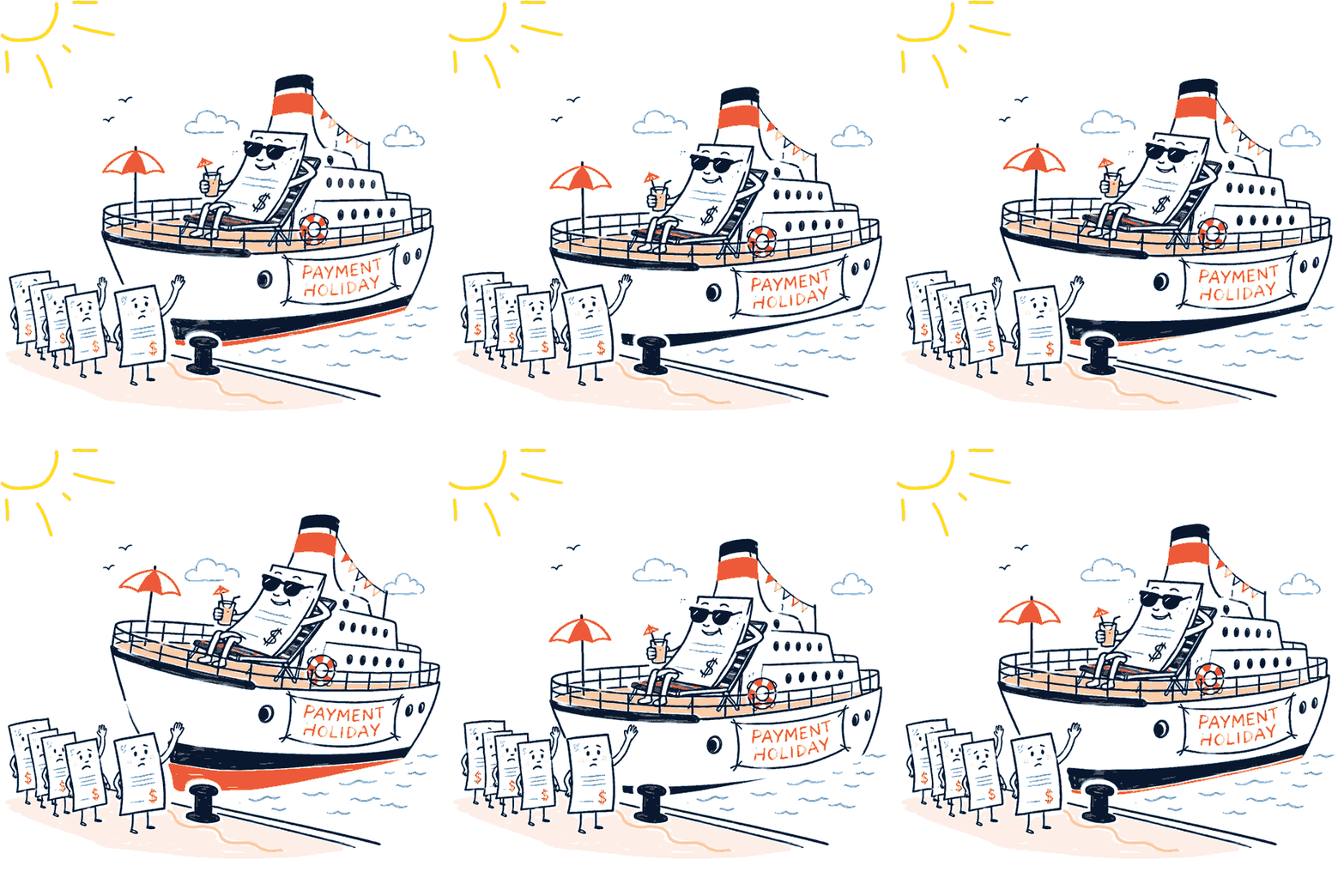
Network payers occupy a space between the claims administrator and the provider, issuing payment to providers on the claims administrator’s behalf, typically at a reduced rate. This network arrangement means lower reimbursements for providers and adds an extra layer of bureaucratic complexity and administrative friction that can delay payments for months.
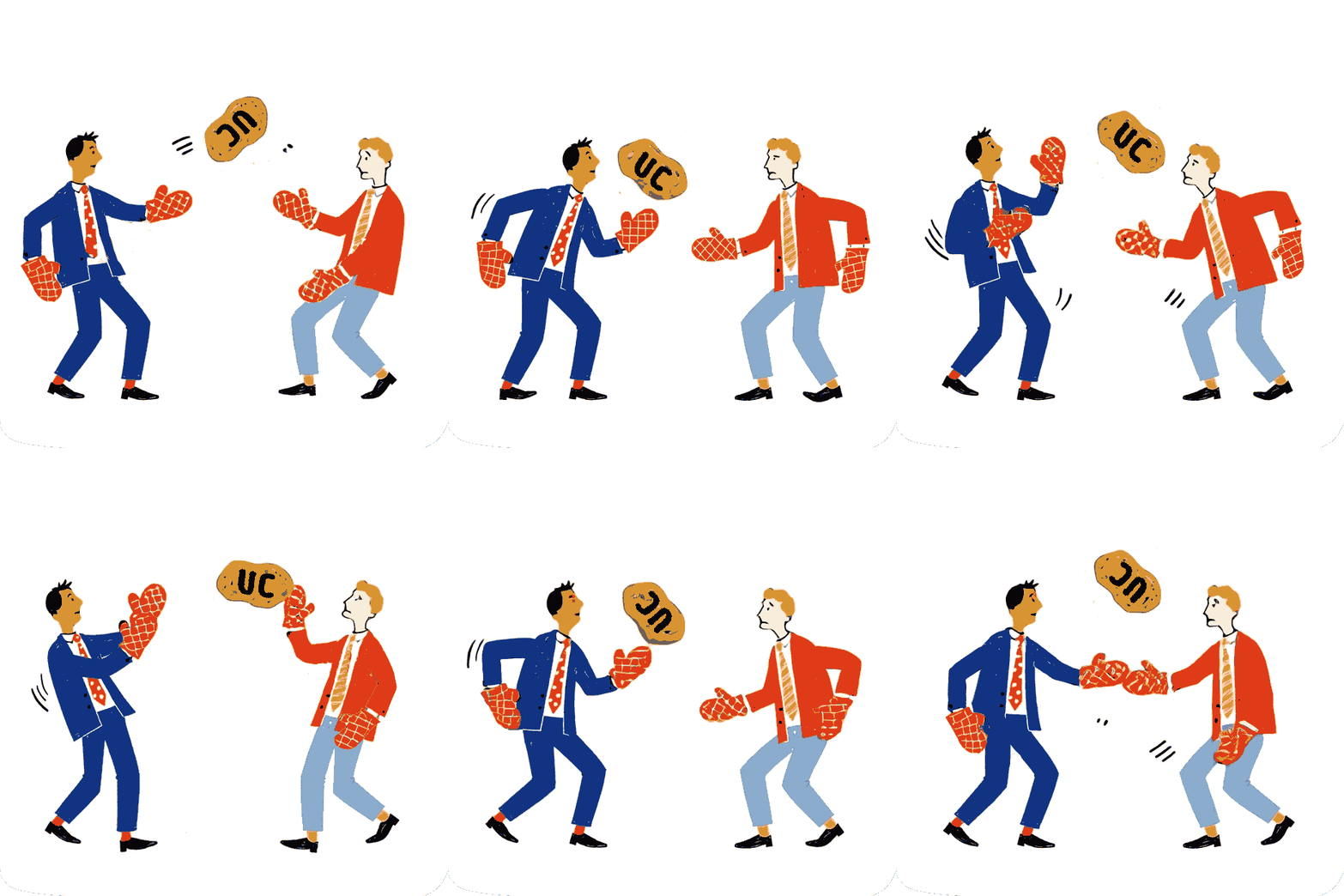
daisyNews has detailed multiple incidents in which neither Sedgwick nor Apricus pays a provider’s valid bills, and each directs the provider to the other for an answer. Legally, Sedgwick is responsible for ensuring payment and compliant bill responses, but Apricus reports that “cash posting delays” are holding up payment across their systems.
The clown show continues with a bungled electronic bill (e-bill) for a Safeway employee’s treatment, which Sedgwick initially ordered Apricus not to pay. Though the TPA ultimately reversed course, there’s no guarantee the reimbursement will actually arrive without further struggle.
Apricus “Cash Posting Delays” Continue
When neither Sedgwick nor Apricus responded to a provider’s valid e-bill, daisyCollect resubmitted it. In a scene we’ve witnessed far too many times, Sedgwick denied the resubmission for being a duplicate of the original bill Sedgwick had ignored (technically true, but obviously an absurd reason for denial).
Subsequently, daisyCollect called Apricus. An Apricus representative noticed that the e-bill was “past the timeframe of the processing time, which is three to four weeks.” Regardless of Apricus’s in-house “timeframes,” the statutory deadline to pay an e-bill in California is 15 working days.
The Apricus rep escalated the case and emailed daisyCollect the following day, confirming that no payment had been issued due to “cash posting delays across our system,” a vague and unacceptable explanation for failing to follow the law, and one that Apricus has repeatedly used in reference to multiple unpaid e-bills.
Sedgwick: “Do Not Pay”
As the designated claims administrator, Sedgwick is the party legally responsible for ensuring a timely and compliant response to the provider’s bills, regardless of Apricus’s adjudication or systemic “delays.”
Accordingly, daisyCollect called Sedgwick to inquire about the unpaid bill. A Sedgwick representative revealed that the TPA had forwarded the original e-bill to Apricus with special instructions: “No pay. Maximum deferred medical exceeded. Do not pay.”
The Sedgwick rep confirmed that, subsequently, the TPA received the resubmitted e-bill and sent it to the claims adjuster with new instructions: “It’s okay to process.” Regardless, Sedgwick’s automated systems still treated the bill as a duplicate submission, so the TPA denied the bill, despite the instructions to pay it.
The Sedgwick rep suggested submitting the e-bill again as a “reconsideration,” i.e., a Second Review appeal.
The CA DWC’s Abject Failure to Police Sedgwick
If it were any other payer, the Sedgwick rep’s suggestion of sending a Second Review appeal for this e-bill would sound reasonable.
But this isn’t any other payer.
Sedgwick has a long and egregious history of denying valid Second Review appeals as “duplicate submissions,” despite the appeals being unmistakably marked as appeals.
daisyBill has submitted formal Audit Complaints to the California Division of Workers’ Compensation (CA DWC) reporting over 40,000 instances of this pattern, a number so large that it can only represent a purposeful business practice or astounding incompetence on the part of the nation’s largest TPA.
Even defense (i.e., payer) attorneys have noticed the pattern, with one firm opining in 2024 that “an astounding 22,155 audit complaints [the exact number daisyBill had filed against Sedgwick at the time] are currently on file against just one bill review company for inappropriately raising ‘duplicate submission’ as an excuse for denying reconsideration,” and noting that (emphases ours):
“Although it may be understandable for bill reviewers to fail to recognize an SBR-1 form once or perhaps twice, it certainly is not realistic to believe they are unable to recognize the same form 22,155 times.”
Those Second Review violations are in addition to hundreds of thousands of other violations by Sedgwick, mostly failure to send compliant electronic Explanations of Review to providers in response to e-bills. As of this writing, daisyBill has reported 359,626 total Sedgwick violations to the state (and counting).
Our Audit Complaints have resulted in zero penalties or substantive consequences for Sedgwick.
California providers are avoiding workers’ comp patients, with major health systems such as the UCLA Health, UCSF Health, Stanford Health Care, and Cedars-Sinai reportedly closing their doors to injured workers entirely.
When the CA DWC allows the biggest TPA in the state to behave like this, it’s not hard to understand why.
daisyBill tracks every bill and payment, and guides staff with automated task prompts. Click below to learn more:
BILL BETTER: DAISYBILL

DaisyBill provides content as an insightful service to its readers and clients. It does not offer legal advice and cannot guarantee the accuracy or suitability of its content for a particular purpose.