Sedgwick & Apricus Dispute Leaves Provider Unpaid (Again)
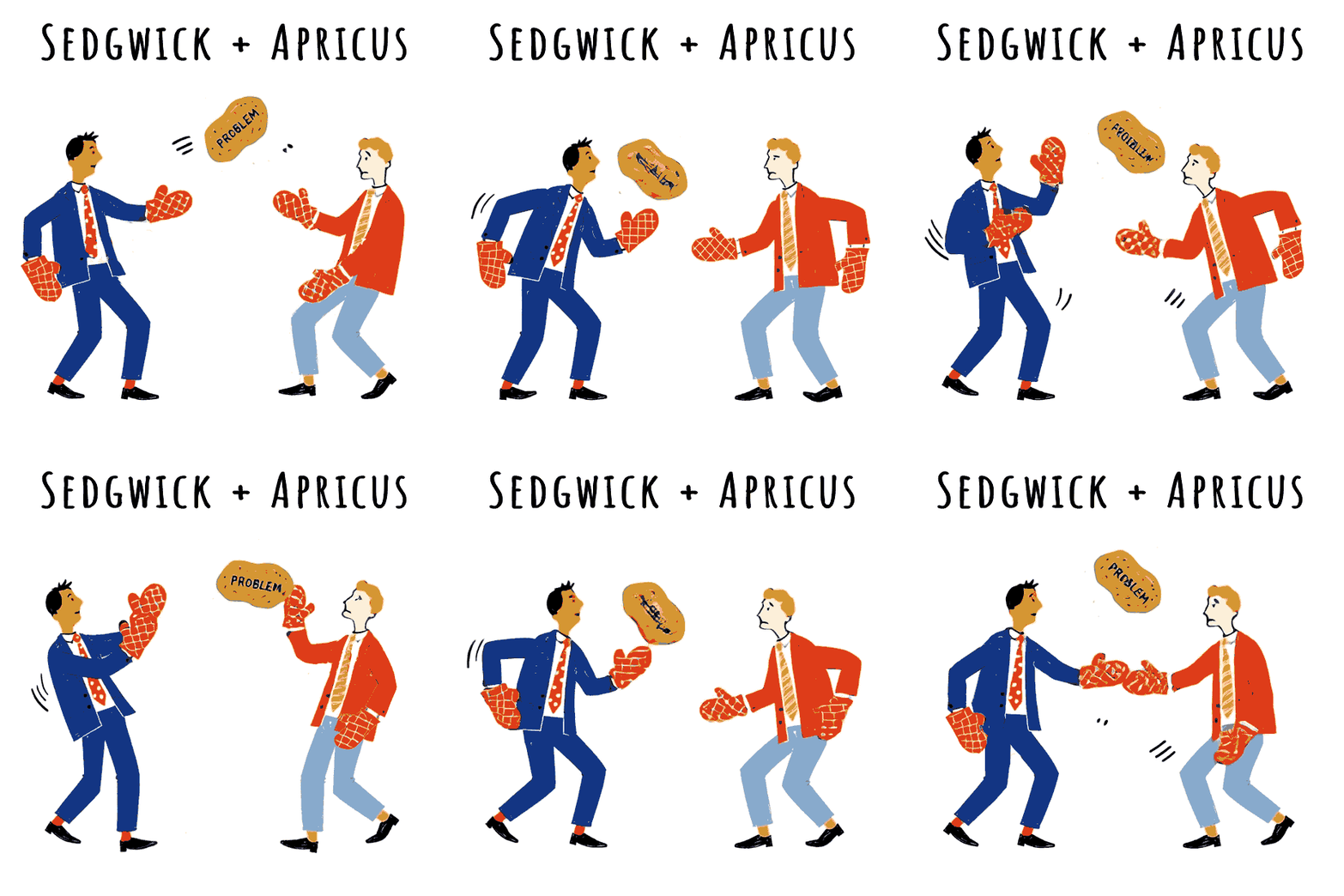
A California provider is missing thousands in reimbursement for authorized treatment due to (another) circular dispute between the Third-Party Administrator (TPA), Sedgwick Claims Management Services, Inc., and the network payer, Apricus.
Sedgwick failed to issue payment to a provider for the treatment of a Securitas Security Services USA employee. When daisyBill called Sedgwick to investigate the missing reimbursements, the TPA reported that it had forwarded the provider’s bills to Apricus for payment.
In an email (below), Apricus confirmed receipt of the e-bills but claimed that Sedgwick had not paid Apricus; therefore, Apricus would not pay the provider. To receive payment, Apricus instructed the provider to obtain the check number verifying that Sedgwick had paid Apricus.
In other words, this doctor remains unpaid, with no clear path to reimbursement from Sedgwick for authorized care, because it is not within the provider’s power to resolve an accounting dispute between Sedgwick and Apricus.
There is already a shortage of providers willing to treat injured workers in California. As the largest TPA in the state, Sedgwick's behavior affects more than a single provider's unpaid claim. When a company this size forces providers to battle just to get paid, providers must reconsider whether treating injured workers is worth the fight.
Sedgwick Blames Apricus and Apricus Blames Sedgwick
After Sedgwick reported that it had forwarded the provider’s e-bills to Apricus for payment, our agent emailed Apricus to obtain the payment status of the e-bills.
Apricus's response (below) asserted that Sedgwick had not paid Apricus. Further, Apricus would research the missing payment only if the provider produced proof that Sedgwick had paid Apricus.
Sedgwick’s Persistent Non-Compliance
California law requires Sedgwick to respond to e-bills with payment and an electronic Explanation of Review (e-EOR) within 15 working days, regardless of the involvement of any other parties, including discount contracting networks.
Network payers like Apricus issue (typically reduced) reimbursements to providers on behalf of claims administrators like Sedgwick. However, Sedgwick, as the designated claims administrator, is legally responsible for ensuring a timely and compliant response to providers’ e-bills.
This kind of payment non-compliance is not unusual for Sedgwick. According to daisyBill's Claims Administrator Directory, over the last 365 days, Sedgwick has sent providers compliant e-EORs for only 41% of the e-bills those providers submitted.
The impact of Sedgwick's frequent, well-documented non-compliance with payment obligations is compounded by the involvement of entities such as Apricus. As difficult as Sedgwick can make it to get paid, when network payers reduce reimbursement rates it makes workers' comp an even less attractive financial proposition for providers.
A TPA this size that fails to send compliant e-EORs for the majority of its e-bills has a systemic impact. When non-compliance seems like standard practice for the largest TPA in the state, every missing e-EOR, duplicate denial, and circular error with a discount contracting entity makes it harder for providers to conclude that treating injured workers is worth the fight.
Sedgwick's scale means that it isn't just a handful of providers absorbing the cost of the TPA’s failures. The entire system of care for California’s injured workers takes a hit.
Dispute bogus denials and reductions in seconds with daisyBill. Click below to see how:
BILL BETTER: DAISYBILL




DaisyBill provides content as an insightful service to its readers and clients. It does not offer legal advice and cannot guarantee the accuracy or suitability of its content for a particular purpose.