Colorado Workers’ Compensation Electronic Billing FAQ

Beginning January 1, 2026, Colorado providers treating injured workers must bill payers electronically (e-billing). Below are some of the most common questions providers may have regarding the new requirements.
What is the Colorado workers’ compensation electronic billing requirement?
Colorado requires most workers’ compensation medical bills to be submitted electronically. The requirement is issued by the Colorado Division of Workers’ Compensation under CCR § 1101-3, Rule 16-8-1.
When does the electronic billing requirement take effect?
The electronic billing mandate takes effect on January 1, 2026.
Which medical providers must submit electronic bills?
Medical providers that submit 25 or more Colorado workers’ compensation medical bills per month must submit those bills electronically and may not submit paper bills after the effective date.
Which providers are exempt from electronic billing?
Providers that submit fewer than 25 workers’ compensation bills per month and interpreters are exempt from the electronic billing requirement.
Which payers must accept electronic bills?
Most workers’ compensation payers in Colorado must accept electronic medical bills and respond electronically.
Which payers are exempt from accepting electronic bills?
Self-insured employers are exempt from the requirement to accept electronic bills.
What is the deadline for submitting electronic medical bills?
Electronic bills must be submitted within 120 days of the date of service.
How quickly must payers acknowledge receipt of an electronic bill?
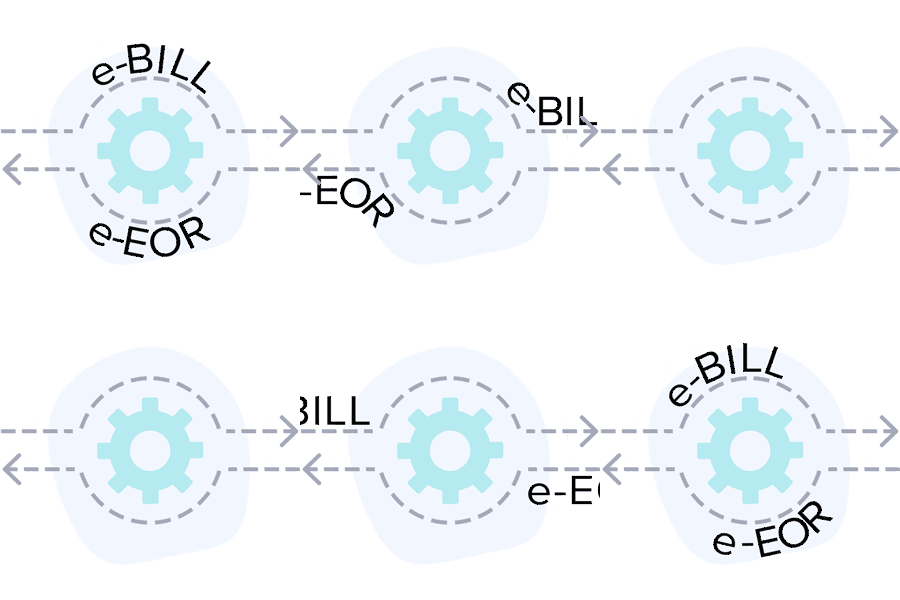
Payers must issue an electronic acknowledgment of receipt within 2 working days of receiving an electronic bill.
When must payers issue electronic remittance advice and payment?
Payers must issue an electronic remittance advice within 30 days of receipt of the electronic bill or within 5 days of generating payment, whichever occurs first, and must remit payment within 30 days of receipt.
Is a specific clearinghouse required for electronic billing?
The rule does not require use of a single clearinghouse. Electronic bills must be routed correctly to the payer’s designated intake system in an acceptable format.
What happens if an electronic bill is misrouted or improperly formatted?
Incorrectly routed or improperly formatted electronic bills may result in delays or rejections.
Does electronic billing improve payment speed in Colorado workers’ compensation?
Colorado’s largest workers’ compensation payer, Pinnacol Assurance, processes electronic bills significantly faster than paper submissions, paying electronic bills for daisyBill clients in approximately 2.1 working days.
Don’t settle for a clearinghouse. daisyBill tracks every workers’ comp e-bill and alerts practice staff when action is needed. Click below to learn more:
BILL BETTER: DAISYBILL
.gif)

DaisyBill provides content as an insightful service to its readers and clients. It does not offer legal advice and cannot guarantee the accuracy or suitability of its content for a particular purpose.