CA: What Every WCAB Attorney and Lien Rep Needs to Know
Picture this: It's a lien hearing at the Workers' Compensation Appeals Board. Defense counsel has run the numbers. Applicant's attorney has run the numbers. Both used daisyWizard. And yet, the two calculations don't match.
The judge looks up from the bench. Both sides are pointing to the same tool. Both calculations are different. Now what?
The calculator isn’t wrong. Someone’s facts are.
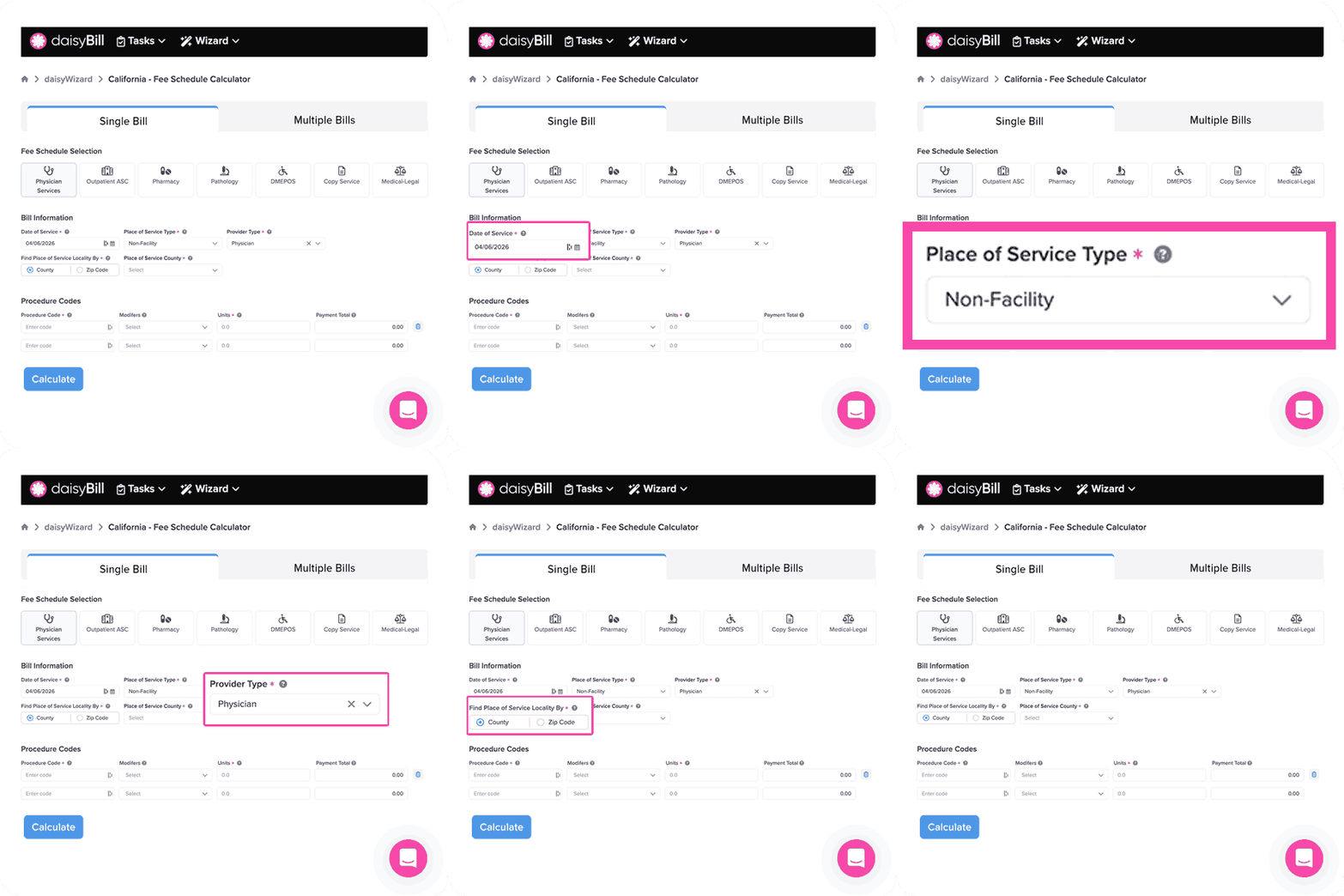
daisyWizard calculates California Official Medical Fee Schedule (OMFS) reimbursement amounts instantly and with verifiable arithmetic, but correct reimbursement isn't a single static figure. California workers' comp fee schedules set reimbursement based on four specific variables. If the two sides enter different values for those variables, they will get different results. Both results may be internally accurate. But only one reflects the facts of the case.
This is why understanding the four essential inputs, and agreeing on what those inputs should be, is critical before you walk into a WCAB hearing.
The Four Variable Inputs That Determine Reimbursement
1. Date of Service
California fee schedules are updated quarterly. The reimbursement amount for the exact same procedure code can differ significantly depending on when the treatment was provided. Always confirm the actual date of service from the medical record or billing documentation. Even being off by a single day across a fee schedule update can change the result.
When two calculations diverge, confirming the date of service each side used is often the fastest way to identify the source of the discrepancy.
2. Place of Service Type: Facility vs. Non-Facility
Reimbursement rates differ depending on whether treatment was delivered in a facility setting (such as a hospital outpatient department or ambulatory surgical center) or a non-facility setting (such as a private physician's office). This distinction isn't always obvious from the bill alone. It requires understanding where the service was actually rendered.
This is a factual question, not an interpretive one. The underlying medical records or operative reports will resolve it.
3. Provider Type
Whether the billing provider is a physician or a non-physician practitioner can affect the applicable rate. The billing documentation and the provider's license type will determine which designation is correct and which side's calculation reflects reality.
4. Place of Service Locality (County or ZIP Code)
California is a large state with significant geographic variation in reimbursement. daisyWizard accounts for locality (searchable by county or ZIP code), and the correct locality must match where the treatment was actually provided.
Locality disputes are straightforward to resolve once the actual treatment address is confirmed from the medical record or facility documentation.
Same Tool, Different Inputs, Different Results
When two attorneys arrive at a WCAB lien hearing with conflicting daisyWizard calculations, the dispute is never about the tool. It comes down to the facts underlying the inputs. Focus the dispute where it belongs: on the underlying facts of the bill, not on whose calculations are right.
And because every daisyWizard calculation includes a detailed, downloadable PDF breakdown showing exactly how the reimbursement was calculated — every variable, every formula, every step — both sides can quickly identify exactly where their inputs diverged. That transparency is what makes daisyWizard uniquely suited to legal proceedings.
Why daisyWizard Has Become the Standard on Both Sides of the WCAB
It's no accident that both applicant and defense attorneys are showing up to WCAB lien hearings with daisyWizard calculations, and that judges are increasingly familiar with its PDF breakdowns as evidentiary support. The tool has earned that role for a few reasons:
- Instant, reliable results for millions of bills across California, New York, and the US Department of Labor
- Coverage across seven major California fee schedules: Physician and Non-Physician Practitioner Services, Ambulatory Surgical Centers, Pharmacy, Pathology and Clinical Laboratory, DMEPOS, Copy Services, and Medical-Legal Services
- PDF breakdowns that document every factor in the calculation and hold up under scrutiny by any authority
- Additional research tools, including the searchable MPN List, Drug Formulary Tool, and IBR Decision Library for researching past billing disputes
The daisyWizard is available as a standalone subscription, with no full billing software required, making it the right tool for attorneys who need authoritative fee schedule data without the broader revenue management suite.
Before Your Next Hearing: Agree on the Inputs
If you're an attorney preparing for a lien hearing, the most productive pre-hearing conversation you can have with opposing counsel may be about these four variables. If both sides agree on the date of service, place of service type, provider type, and locality — and both use daisyWizard — you will get the same answer. Every time.
And if you're a judge facing two conflicting calculations from the same tool, you now know exactly where to look. The four inputs above will tell you everything you need to know about why the numbers differ, and which one is right.
That leaves a lot less to argue about.
Click below to try the daisyWizard’s Fee Schedule Calculator free for 3 days:
TRY THE CALCULATOR

.gif)

DaisyBill provides content as an insightful service to its readers and clients. It does not offer legal advice and cannot guarantee the accuracy or suitability of its content for a particular purpose.

The reason I've experienced inconsistencies is because defense bill reviews do not have the correct units and/or modifiers.