Montana State Fund Announces $45M in Dividends
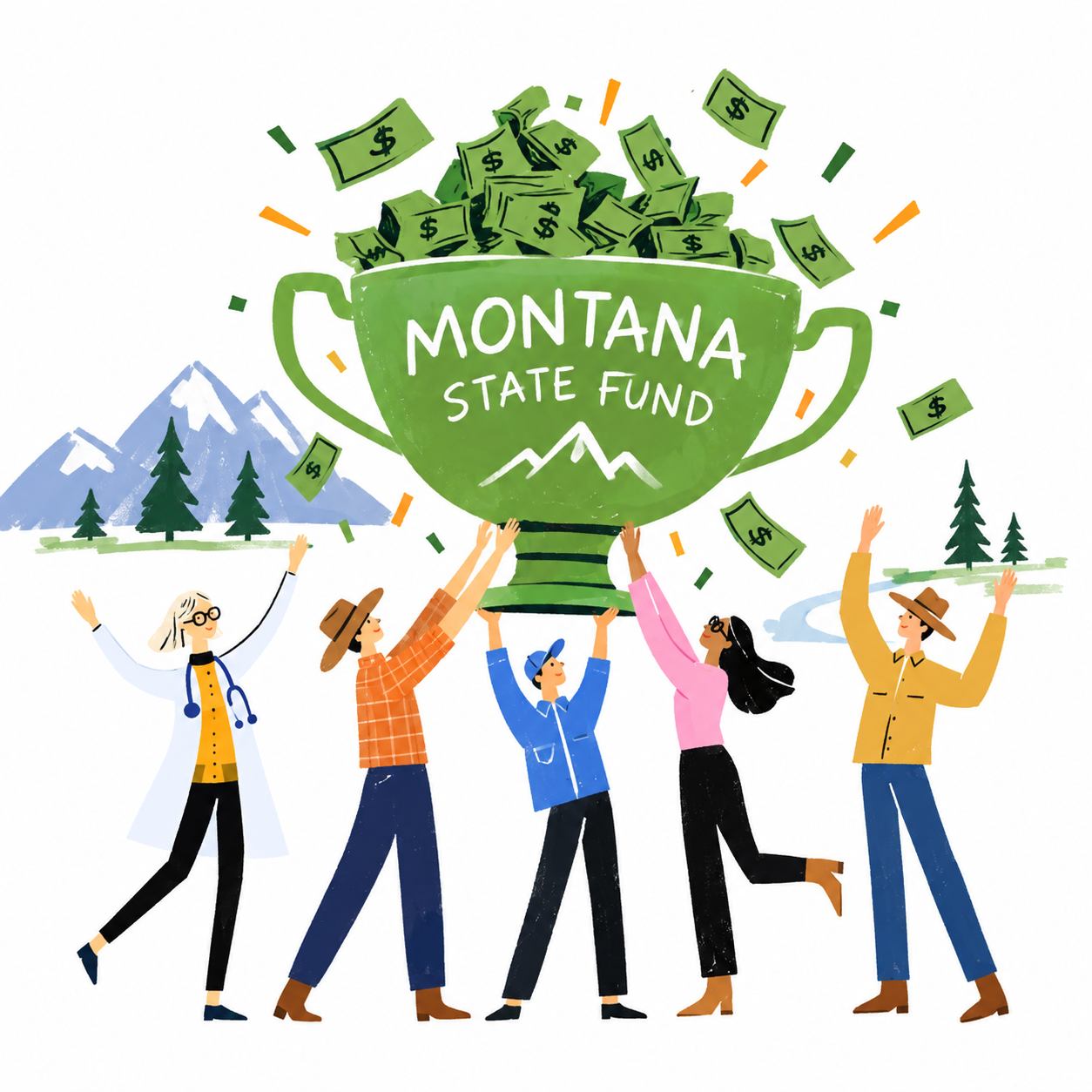
Montana State Fund (MSF) will distribute $45 million in dividends to workers’ comp policyholders this month.
MSF is a non-profit, independent public corporation governed by a state-appointed Board of Directors. It’s also the largest comp insurer in the state and the insurer of last resort, making it the central pillar of Montana’s workers’ compensation insurance market.
For each employer using MSF, the dividend payout will equal about 24% of the amount the employer paid in premiums.
Like almost every other state in the nation over the last few years, Montana has enjoyed generally decreasing workers’ comp loss costs, falling premiums, and substantial dividend payouts from public, mutual, and various non-profit insurers. As workers’ comp remains steadily profitable and workplace safety gains continue, employers are seeing financial relief.
However, as daisyNews continues to point out, California is mysteriously immune to this happy trend.
California premiums are up, with the insurer-funded Workers’ Compensation Insurance Rating Bureau (WCIRB) recommending hikes. Payer-friendly interests gesture vaguely toward Cumulative Trauma claims and “unlisted” medical services as justification for demanding more employer dollars, but fail to substantiate their insinuations.
Meanwhile, litigation, “cost control,” and administrative expenses consume $0.52 for every dollar spent on care and benefits.
MSF: Grounding a Stable Comp Market
Montana’s Governor chooses the MSF Board of Directors, subject to Senate confirmation. Otherwise, MSF functions independently of the state, funded only by premiums and investment income. Those premiums have fallen over the past two decades, with MSF reporting that they’re currently almost 65% lower than in 2006.
Like the majority of states, Montana determines workers’ comp loss costs, which directly inform premium rates, based on recommendations from the National Council on Compensation Insurance.
MSF has also managed major dividend payouts over the years, totaling over $557 million since the turn of the century. This month, 22,000 employers covered by MSF will receive dividend checks, receiving their share of the $45 million bounty; MSF calculates each employer’s payout as 23.9% of the amount paid in premiums, effectively granting a retroactive 24% rate cut.
Like its counterpart in California, MSF invests in its long-term success by supporting workplace safety initiatives, including a team of safety consultants available to policyholders, help with safety program development, and a slew of free resources on safemt.com.
The California Contrast
California’s State Compensation Insurance Fund (CA State Fund) is also a model insurer of last resort, ensuring coverage and cutting dividend checks at a California-sized scale. Unfortunately, CA State Fund is one of the only bright spots in an otherwise dreary California comp market.
In September, California increased premium rates for the second year in a row, by 6.6%. The WCIRB makes a seriously questionable case for these hikes, especially given well-founded skepticism about how it acquires, handles, and reports data.
Broadly, there seems to be no plausible reason for California to buck the falling-premium trend, with comp profits stable nationally, healthy loss ratios in California specifically, and the CA State Fund paying hefty dividends. Meanwhile, provider reimbursement is low, and medical costs are nothing special.
State after state continues to report good news, with employers across the nation spending less and less to cover their employees. How the nation’s largest comp marketplace doesn’t reflect this trend should be a scandal that sends employers howling to Sacramento.
daisyBill gets providers paid faster and more accurately for comp treatment in every state. Click to learn more:
BILL BETTER: DAISYBILL
DaisyBill provides content as an insightful service to its readers and clients. It does not offer legal advice and cannot guarantee the accuracy or suitability of its content for a particular purpose.