As Most States Cut Comp Rates, CA Raised Them. That Makes No Sense.
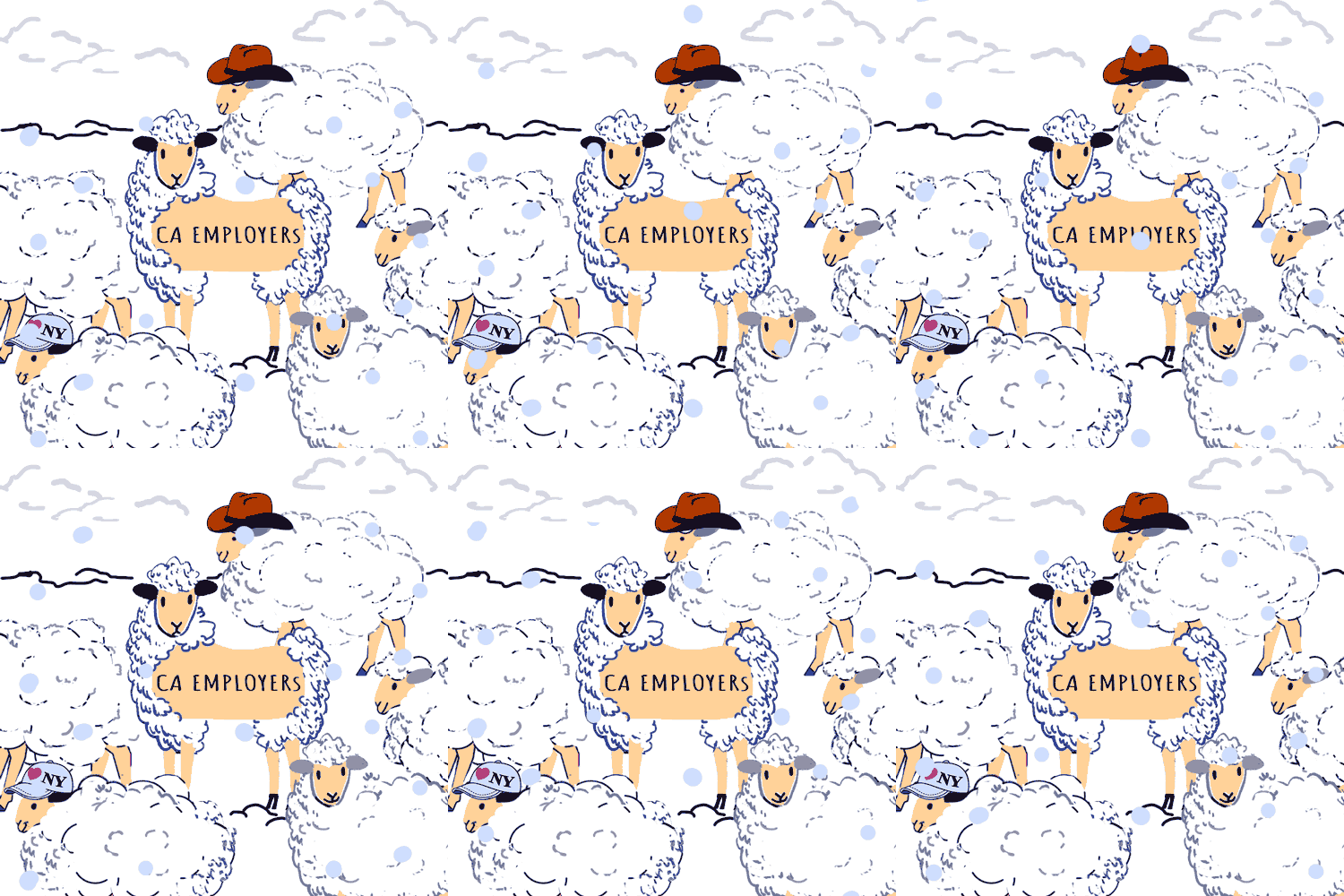
Last year, California hit employers with an 8.7% increase in workers' comp premium rates. Meanwhile, almost every other state is cutting rates, in some cases, for more than a decade in a row.
daisyNews has been tracking workers' comp premium changes, and the nationwide picture couldn't be clearer. Medical costs are stable. Workers' comp is one of the most profitable lines of insurance. State after state has looked at the data and passed that success on to employers in the form of rate cuts.
California looked at the same data and did the opposite.
For a mid-sized California employer paying $100,000 annually in workers' comp premiums, the 8.7% hike amounts to $8,700 more per year. Worse, California leadership has offered no sufficient explanation for this extra cost.
Comp Rate Decreases: The New Normal (Except in CA)
daisyNews has reported in detail on workers' comp premium changes for all states in the table below. All but California have lowered premium rates directly or decreased the "loss cost" levels that inform premium rates.
In determining rates, some states take their guidance from the National Council on Compensation Insurance (NCCI). Others use their own independent rating bureaus, like California's Workers' Compensation Insurance Rating Bureau (WCIRB). Ohio provides comp coverage directly from the state government, which also determines rates.
State |
Premium/Loss Cost Change |
Effective Date |
Rate Recommendation Body |
+ 8.7% |
9/1/2025 |
WCIRB (Independent) |
|
- 11.5% |
7/1/2025 |
NCCI |
|
- 6.9% |
1/1/2026 |
NCCI |
|
- 13.2% |
10/1/2026 |
NYCIRB (Independent) |
|
|
- 6% (private)* - 1% (public) |
7/1/2025 (private) 1/1/2026 (public) |
BWC (State-run) |
|
- 4.3% |
1/1/2026 |
NJCRIB (Independent) |
|
- 6.7% |
1/1/2026 |
NCCI |
|
|
- 2% (voluntary market) - 1.1% (assigned risk) |
3/1/2026 |
NCCI |
|
|
- 11.6% (voluntary market) - 9.08% (residual market) |
12/1/2025 |
DCRB (Independent) |
*Breaking: Ohio announced an additional 1% cut for private employers effective July 1, 2026.
Averaged across all eight states, employers are seeing rate reductions of roughly 8%, almost the exact mirror image of what California is asking employers to absorb.
The cuts tell a consistent story:
- Texas decreased average loss cost levels by 11.5%, with the NCCI noting that "the workers' compensation system continues to be healthy" and that medical cost inflation "remained stable."
- Florida cut employer rates by 6.9%, marking the ninth consecutive year of decreases, and also raised reimbursement rates for providers, demonstrating that it's possible to do right by doctors without overburdening employers.
- New York reduced loss-cost levels by 13.2%. The Workers' Compensation Board also reduced its annual employer assessment rate to 7.0% of standard premium, continuing a downward trend that has cut assessments by roughly 40% since 2019.
- Ohio cut rates by 6% for private employers and 1% for public employers, with an additional 1% cut for private employers announced for July 2026. Rates for private employers have fallen every year since 2018.
- New Jersey cut rates by 4.3% for 2026, capping more than a decade of rates that have either dropped or held flat, with decreases in nine of the last ten years.
- Arizona announced its 12th consecutive year of rate decreases with a 6.7% cut. The NCCI cited "frequency declines and moderate benefit costs" as contributing factors.
- Tennessee announced its 13th consecutive year of rate reductions: a 2.0% loss cost decrease for the voluntary market and a 1.1% decrease in the assigned risk rate level.
- Delaware cut rates for the ninth consecutive year, with an 11.6% average loss cost decrease for the voluntary market and a 9.08% reduction in the residual market, while also increasing reimbursements for providers.
…and Then There's California
Several of the states above use independent rating bureaus, just like California. New York, New Jersey, Ohio, and Delaware all rely on independent bodies. All reached the same conclusion: cut rates.
California's WCIRB is also independent, but its reporting raises serious questions:
- “Skewed” profit reporting: Workers' Comp Executive has asserted that the WCIRB systematically under-reports insurer profits, making the market look less healthy than it actually is.
- A distorted definition of "medical" costs: The WCIRB uses a loose definition of “medical” costs that includes decidedly non-medical expenses like Medical-Legal disputes.
- Vanishing discounts: WCIRB reports completely ignore the deep Preferred Provider Organization (PPO) discounts that keep real-world provider reimbursement rates low. The result is a significant overstatement of what insurers actually pay for medical treatment.
These aren't minor statistical or actuarial quibbles. They go to the heart of how California and the WCIRB justify premium rates, and they deserve scrutiny.
Meanwhile, the National Association of Insurance Commissioners reports healthy loss ratios for California insurers across the board (including for the State Compensation Insurance Fund, the insurer of last resort that doesn’t even attempt to generate profit). California's fee schedules for workers' comp providers are among the lowest in the nation, and PPO contracts drive them lower still.
California Employers Deserve a Better Answer
The national evidence is overwhelming: insurers are profitable and medical costs are manageable. The logical move is to give employers a break. Eight states, using varying rating methodologies, arrived at that same conclusion independently.
California arrived somewhere else entirely, guided by data that insurers supply, and that independent observers have called into question. Until the WCIRB opens its methodology to real scrutiny, California employers have every right to ask why they're among the only ones being asked to pay more.
daisyBill makes billing for workers’ comp patients easier, faster, and more accurate. Click below to learn more:
BILL BETTER: DAISYBILL
.gif)


DaisyBill provides content as an insightful service to its readers and clients. It does not offer legal advice and cannot guarantee the accuracy or suitability of its content for a particular purpose.
.png)

As always, nice work on getting this information out.