Insurers Are Fleecing CA Employers: TN Edition
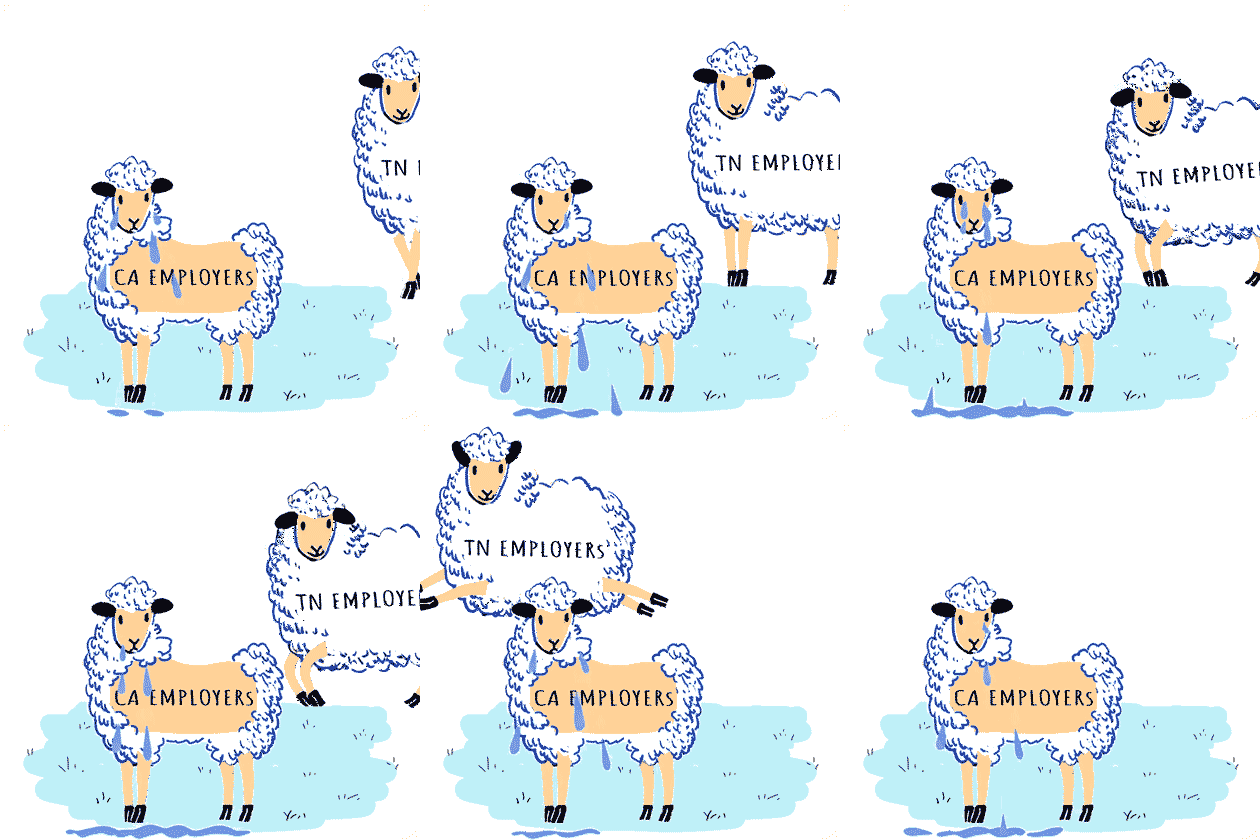
Tennessee just announced its 13th consecutive year of declining workers' comp premium rates.
The Tennessee Department of Commerce and Insurance (TDCI) approved a 2.0% overall loss cost decrease for the voluntary market and a 1.1% decrease in the assigned risk rate level, both effective March 1, 2026.
Like most states, Tennessee takes its rate-setting cues from the National Council on Compensation Insurance (NCCI), which has consistently found that market conditions in the workers’ comp space justify easing employers' burden. In state after state, employers are paying less for comp coverage.
…yet, California continues to defy the trend, raising premiums and insisting that insurers need more and more of employers’ money.
TN: 13 Years and Counting
TDCI Commissioner Carter Lawrence signed the relevant orders for voluntary and assigned risk coverage on December 23, 2025, and January 16, 2026, respectively. Governor Bill Lee welcomed the news, stating (emphases ours):
"Lower premiums allow business owners to have the flexibility they need to re-invest in their companies and continue to support Tennessee's strong economy."
Commissioner Lawrence credited the news to safer workplaces and fewer injuries, noting that the decreases "result from decreases in lost time claim frequency and more stable claims costs."
This is the narrative across the nation: as a line of insurance, workers' comp is beyond healthy. Medical costs are manageable, and insurers are raking it in. The logical conclusion (in Tennessee and nearly everywhere else) is that employers deserve a break on premiums.
CA: Why the Hike?
Last year, California Insurance Commissioner Ricardo Lara approved an 8.7% rate increase for employers, at the request of the Workers' Compensation Insurance Rating Bureau (WCIRB).
The WCIRB is insurer-funded and insurer-controlled. Its Actuarial Committee (the body that advises on premium rate proposals) is dominated by insurer representatives 7 to 1. Its reports are based on data supplied exclusively by its insurer members, the accuracy of which even the WCIRB itself disclaims.
While using insurer-derived data and making disclaimers is not a unique practice for an independent rating bureau, there are valid concerns about the WCIRB’s opacity. Workers' Comp Executive reports that the WCIRB “skews” data in insurers' favor by under-reporting certain sources of profit, while daisyNews notes that WCIRB reports misidentify “medical” expenses and fail to factor in rampant reimbursement discounting.
To be clear, California is not the only state using its own rating bureau rather than a government entity or the NCCI. States like New York and New Jersey also have independent bureaus, but are still lowering premiums. No matter who does the math, most of the United States has reached the same conclusion re: comp rates.
Moreover, loss cost figures from the National Association of Insurance Commissioners strongly suggest profitability for California insurers specifically, including the State Compensation Insurance Fund, the state’s non-profit insurer of last resort.
Meanwhile, California's workers' comp fee schedules are among the lowest in the nation, and claims administrators routinely pay providers well below those rates through barely-regulated Preferred Provider Organization discounting.
So: insurers are profitable. Medical costs are stable. Providers are getting squeezed. Yet somehow, California employers are paying 8.7% more for the privilege of funding this inefficient, overpriced, crumbling system.
daisyBill makes workers’ comp billing a breeze in every state, with automated bill tracking and task prompts for staff. Click below to learn more:
BILL BETTER: DAISYBILL
.png)



DaisyBill provides content as an insightful service to its readers and clients. It does not offer legal advice and cannot guarantee the accuracy or suitability of its content for a particular purpose.

.png)