Insurers Are Fleecing CA Employers: NJ Edition
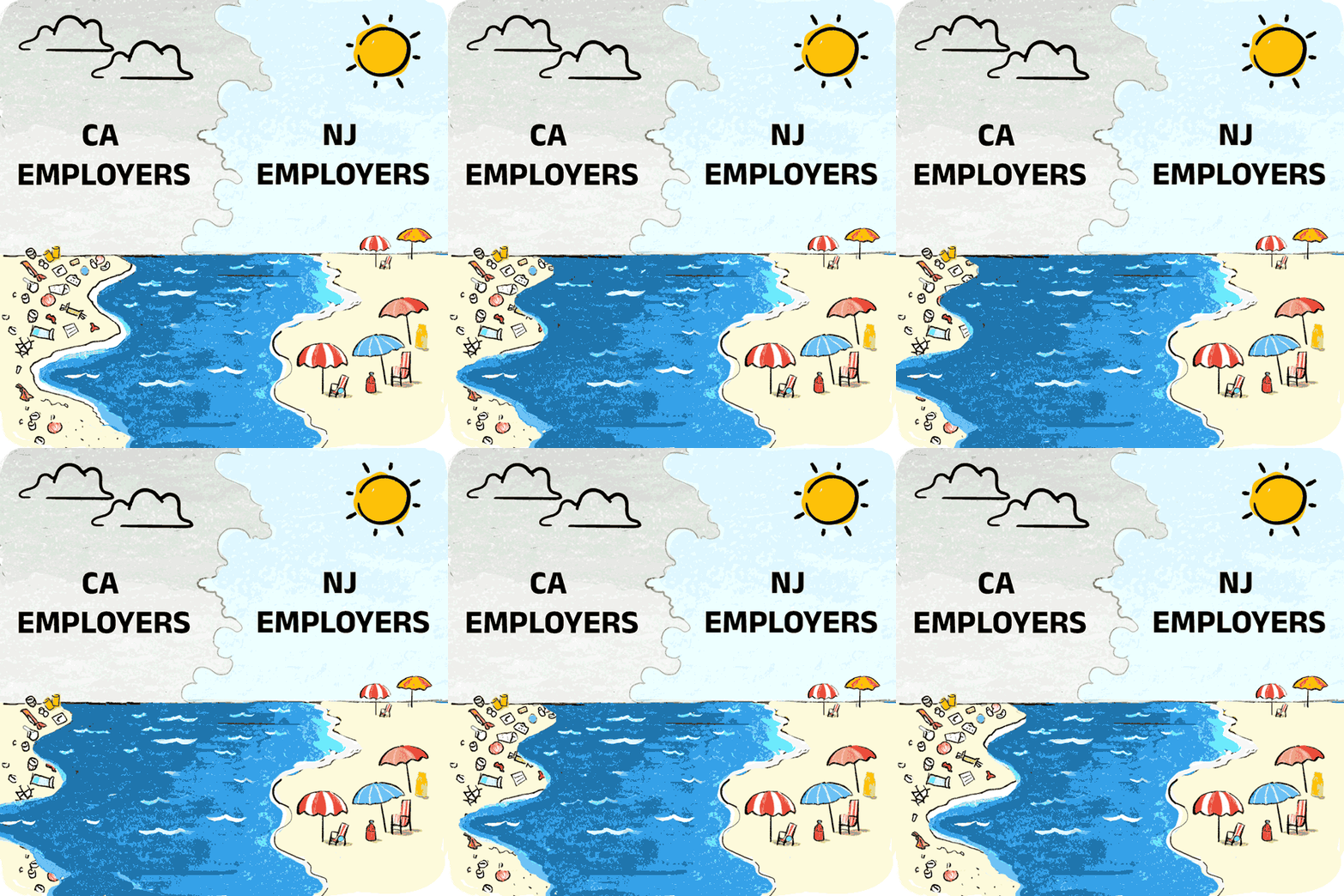
In 2026, New Jersey employers will continue to enjoy the benefits of a positive national trend: cheaper premium rates for workers’ comp coverage.
The New Jersey Compensation Rating and Inspection Bureau (NJCRIB) announced a 4.3% decrease in workers’ comp rates, which the state’s Department of Banking and Insurance approved effective January 1.
This marks over a decade of New Jersey premium rates that either decreased or (at worst) remained flat each year.
Meanwhile on the opposite coast, the Workers’ Compensation Insurance Rating Bureau (WCIRB) and state Insurance Commissioner Ricardo Lara hit California employers with an 8.7% rate increase last year.
Workers’ comp is historically profitable for insurers. Medical inflation is minimal. California fee schedules for provider reimbursement are among the lowest nationwide. Yet somehow, all of this translates to more expensive comp coverage for California employers, based on opaque, unverifiable reporting from the WCIRB.
If you run a business in California, the Powers That Be owe you an explanation.
NJ: Lower Comp Rates for 2026
In a Circular, the NJCRIB dropped the good news for New Jersey employers, stating (emphases ours):
“The Department of Banking and Insurance has approved a 4.3% decrease in rates and rating values applicable to New Jersey workers’ compensation and employers’ liability insurance effective January 1, 2026, on new and renewal policies. The approved rate change is based on the latest financial and statistical data reported to the Rating Bureau…”
This caps a decade-long spell of rates that have either dropped or held steady since 2016.
Previous NJCRIB Circulars reveal the long downward slope:
Year |
NJCRIB Rate Change |
No change from 2015 |
|
- 3% |
|
- 5.1% |
|
- 5.3% |
|
- 5.8% |
|
2021 |
No NJCRIB Rate Revision Circular published |
- 5.3% |
|
- 6.1% |
|
- 3.9% |
|
- 6.9% |
|
- 4.3% |
CA: WCIRB Wants More Employer Dollars for Insurers
In September 2025, California’s Insurance Commissioner acquiesced to the WCIRB’s proposed 8.7% increase in the premium advisory rate. As insurers’ comp profits soar nationally (and credible data indicate profitability for California insurers specifically), how does the WCIRB justify charging employers more?
Besides the sheer opacity of its reporting, which is based exclusively on unverifiable, insurer-supplied data, several factors call into question the WCIRB’s claims that insurers need more of employers’ money:
- The WCIRB conveniently miscategorizes non-medical expenses like Medical-Legal disputes as “medical” costs.
- The WCIRB neglects to factor Preferred Provider Organization (PPO) discounts into their calculations of medical costs.
- Insurer representatives dominate the WCIRB’s Actuarial Committee, which informs the organization’s premium rate proposals, 7-1.
- According to Workers’ Comp Executive, the WCIRB makes insurers appear less profitable by excluding key sources of income and failing to distinguish between for-profit private insurers and the State Compensation Insurance Fund.
Insurers are swimming in comp profits. Medical inflation is negligible and California providers are woefully underpaid. So what exactly is all the money the WCIRB demands from employers funding?
Employers have a right to know, especially if California expects them to continue forking over revenue to insatiable insurers.
Let daisyBill keep tabs on your workers’ comp bills and payments, with automatic prompts for staff when a bill needs action. Click below to learn more.
BILL BETTER: DAISYBILL


.gif)

DaisyBill provides content as an insightful service to its readers and clients. It does not offer legal advice and cannot guarantee the accuracy or suitability of its content for a particular purpose.


.png)