NY: WCB Offers Streamlined Training and Resources for Comp Providers
.gif)
New York and its Workers’ Compensation Board (WCB) are on a mission to make it easier for providers to take on workers’ comp patients.
In their latest effort to improve the system and expand access to care, the WCB streamlined the training and resources available to providers seeking Board authorization to treat injured workers. As of December 18, 2025, providers no longer need a CourseMill account to access these resources.
Instead, providers can simply download PDFs with all the necessary information from the Fundamentals for Health Care Providers page.
The Fundamentals page features must-know details on workers’ comp Medical Treatment Guidelines (MTG), fee schedules, the state OnBoard system, billing, and more. Per a WCB announcement, providers applying for Board authorization must attest to having reviewed these resources when completing their online application.
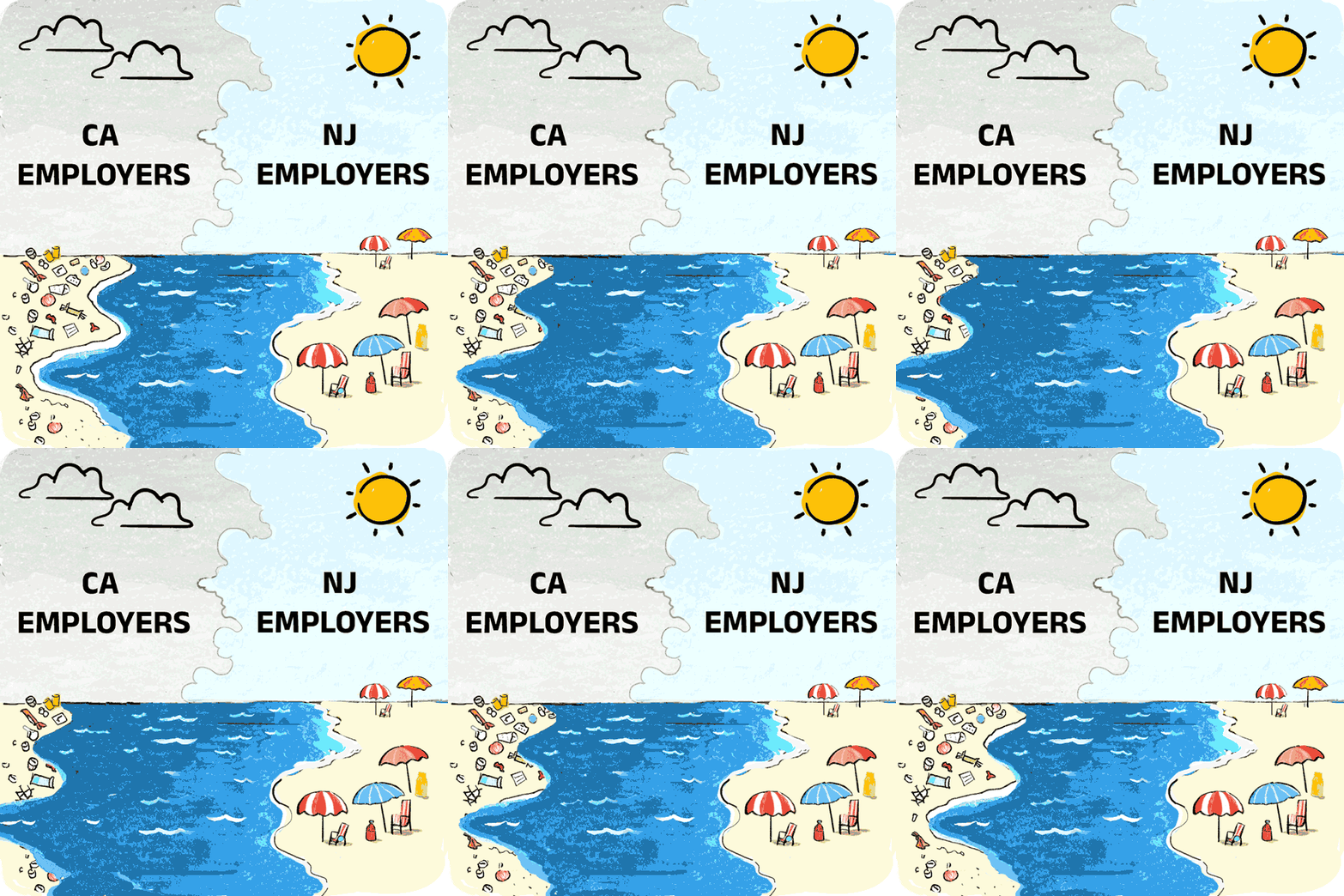
Other states and their workers’ comp regulatory bodies should study the WCB’s proactive approach to reducing systemic friction for providers.
As New York works to make treating injured workers an easier choice, states like California continue to impose excessive administrative hurdles, lopsided regulatory enforcement, and payment abuse.
We urge the California Division of Workers’ Compensation (CA DWC) to look east for a lesson in how to do better.
New for NY: Fundamentals for Health Care Providers
Workers’ comp is vastly different from group health or Medicare, with unique requirements (and complications) for treatment authorization, billing, and more.
In other words, there’s a learning curve for providers who wish to treat injured workers.
The WCB seems keenly aware of these obstacles and regularly offers resources and hosts informative webinars to demystify the system. The Fundamentals for Health Care Providers page is the latest way the WCB has streamlined the experience, replacing the CourseMill system with refreshingly simple, downloadable PDFs.
Providers seeking Board authorization simply:
- Go to the Fundamentals page.
- Review the training topics and the summary of provider obligations.
- Complete the online application for authorization to treat injured workers, which includes attesting that you have reviewed the training and summary of obligations.
In addition to a wealth of helpful explainers and summaries, the Fundamentals page features six specific training PDFs, including:
- An introduction to the MTG
- An introduction to the OnBoard system for treatment authorization requests, billing disputes, and more
- An introduction to the state workers’ comp fee schedules
- The complete workers’ comp drug formulary
- Information on mandatory electronic billing (e-billing)
- Impairment guidelines
Meanwhile in California…
Contrast the WCB’s approach with that of the CA DWC, which seems to have all but abandoned providers in one of the most challenging states in which to treat an injured worker.
California providers often hesitate to take on workers’ comp patients, thanks to persistent, systemic issues that the CA DWC either fails to address or blatantly exacerbates, including:
- Some of the lowest fee schedule rates in the nation
- Rampant, largely ungoverned, and often improper reimbursement discounting
- Implausibly high treatment denial rates
- Frequent, well-documented violations of payment laws and regulations by payers, with little or no consequences from the CA DWC
- Open violations of state law by the CA DWC itself, including failure to timely assign payment disputes and refusal to collect critical data on claims and treatment approval
While the CA DWC offers some ill-organized online resources for providers, the agency has a curious habit of deleting information that actually helps providers protect their rights and interests.
New York and the WCB are embracing technology, removing administrative hurdles, and otherwise doing what they can to encourage provider participation. Why California and the CA DWC continue to ignore the pleas of providers and their advocates is a mystery we have yet to solve.
Don’t settle for a clearinghouse. daisyBill is an approved e-billing submission partner for New York providers treating injured workers.
BILL BETTER: DAISYBILL



DaisyBill provides content as an insightful service to its readers and clients. It does not offer legal advice and cannot guarantee the accuracy or suitability of its content for a particular purpose.