Insurers Are Fleecing CA Employers: NY Edition
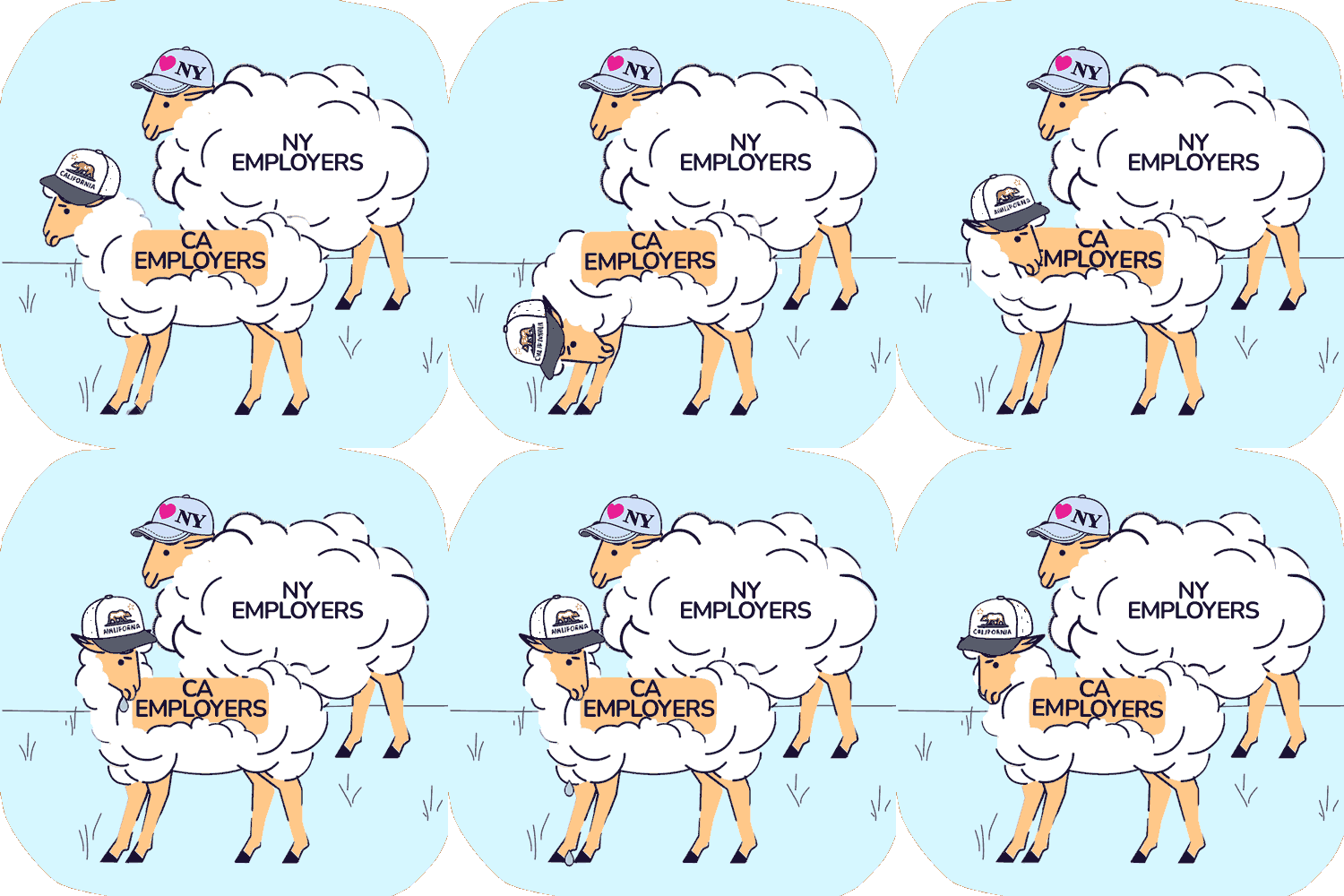
This week, yet another state demonstrates that market conditions warrant a break for employers on the cost of workers’ comp coverage, as California continues to punish employers with steeper premium rates.
New York, in addition to lowering the loss cost levels on which insurers base premium rates, also reduced the state assessment rate that employers pay to fund the Workers’ Compensation Board (WCB).
In 2026, the assessment rate will be 7.0% of the standard premium, continuing a steady downward trend that began in 2019.
Nationwide, employers are paying less for comp coverage. California insists on being a rare exception, with its Insurance Commissioner instituting an 8.7% rate hike this year based on deeply questionable reporting from the Workers’ Compensation Insurance Rating Bureau (WCIRB).
California employers, you deserve answers from the WCIRB, the California Department of Insurance (CDI), and Governor Gavin Newsom.
NY: Better and Better for Workers’ Comp Stakeholders
New York is making strides in improving its workers’ comp system overall, from instituting statewide electronic billing (e-billing) to increasing the number of providers eligible to treat injured workers, among other initiatives.
However, this streak of good news isn’t only for providers and injured workers.
Earlier this year, the New York Compensation Insurance Rating Board (NYCIRB) dropped its loss cost levels by a whopping 13.2%. Insurers base their premium rates on the loss cost level, meaning the reduction translates to (you guessed it) cheaper comp coverage for employers.
On top of that, the WCB Chair announced the annual assessment rate, which employers must pay in addition to their workers’ comp premiums. For 2026, that rate will be 7.0% of the standard premium or premium equivalent, which is:
According to Pasternack Tilker Ziegler Walsh Stanton & Romano (which is quickly running out of room on its company letterhead) this trend is due to “improved financial management at the WCB.” Current 2025 assessment rates are 40% lower than in 2019, with another tenth of a percentage point coming off next year.
Clearly, the WCB is passing the savings of its improved finances on to employers.
…and Then There’s California
As daisyNews has noted each week with our reporting on plummeting comp costs across the US, California’s numbers don’t add up. Premium rates are up 8.7% despite the following facts:
- Premium rates are down nationally, in almost every other state.
- Insurers are profiting stupendously on workers’ comp, the most lucrative line of insurance in the game.
- California insurers have healthy loss cost ratios, indicating profitability.
- California fee schedules for workers’ comp treatment are firmly on the low end of the national spectrum.
- Claims administrators generally do not pay California providers at the (already low) fee schedule rates, thanks to rampant, only nominally regulated Preferred Provider Organization discounting.
The justification for raising employers’ rates comes from the insurer-controlled WCIRB, which cites its unverified, insurer-derived data to assert that claim costs necessitate the hike. Even though the WCIRB cannot verify the accuracy of its underlying data, the CDI acquiesces to its demands for more money from employers.
Running a business is hard enough. Paying through the nose to support a system that consistently fails injured workers is a burden California employers shouldn’t have to bear.
daisyBill makes revenue management for workers’ comp a breeze. Click below to see how.
BILL BETTER: DAISYBILL




DaisyBill provides content as an insightful service to its readers and clients. It does not offer legal advice and cannot guarantee the accuracy or suitability of its content for a particular purpose.

.png)