CA: JPMorgan’s InstaMed Leaves Gallagher Bassett Out of Compliance
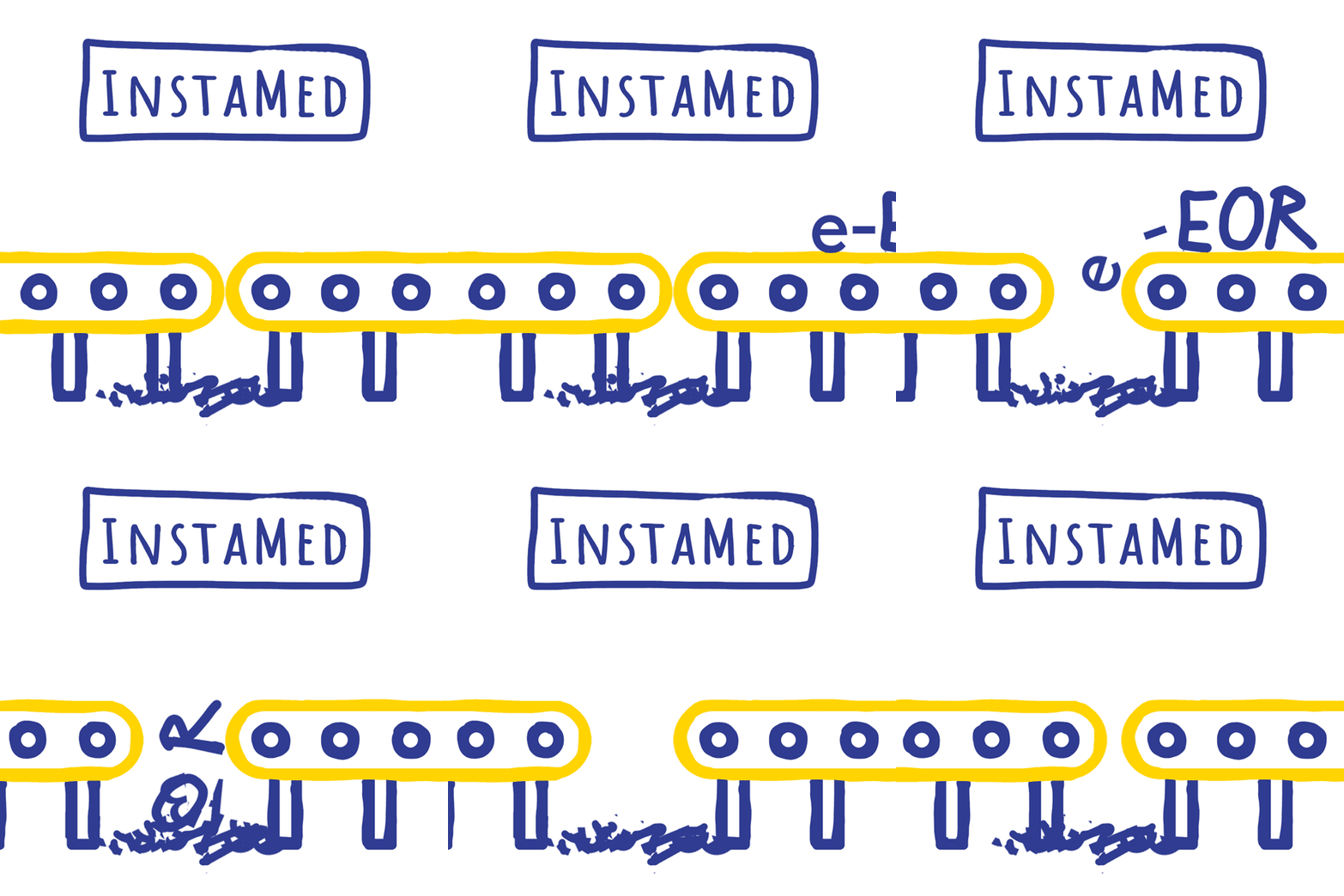
Third-Party Administrator (TPA) Gallagher Bassett has failed to send electronic Explanations of Review (e-EORs) in response to thousands of providers’ electronic bills (e-bills) in 2026, in violation of California law and regulations.
For many providers who opted to receive electronic payments from Gallagher Bassett through JPMorgan’s InstaMed platform, the only remittance advice available is a document on the InstaMed portal. This document does not contain the information necessary for a proper EOR in any format, electronic or paper, and is not sufficient to complete a request for Independent Bill Review (IBR) to resolve a payment dispute.
In other words, through its vendor, InstaMed, Gallagher Bassett is imposing serious administrative work on practices, and effectively cutting off any recourse for the providers it fails to reimburse correctly.
Gallagher Bassett is forcing providers to manually post payment details, denying them proper documentation of those details, and making it impossible for providers to dispute denials and reductions. As the TPA responsible for payment compliance, Gallagher Bassett is legally responsible for InstaMed’s failures on its behalf.
Providers who cannot treat with a reasonable guarantee of proper reimbursement cannot justify taking on workers’ comp patients. By using JPMorgan’s InstaMed platform, Gallagher Bassett is contributing to the needless administrative friction that can deter providers from participating in the comp system.
Gallagher Bassett: 8% of e-EORs Missing in 2026
In the first four months of 2026, Gallagher Bassett has failed to issue e-EORs for 8% of all e-bills the insurer received from daisyBill providers, with month-to-month non-compliance rates ranging from 7% to 9%.
Those data represent 3,569 e-bills for which Gallagher Bassett failed to issue the e-EORs California law and regulations require, and which providers need to automatically post payments, reconcile deposits, and (when necessary) dispute denials and adjustments.
daisyBill will submit formal Audit Complaints with the California Division of Workers’ Compensation (CA DWC) against Gallagher Bassett to report these violations.
e-Bill Submission Month |
daisyBill e-Bills Sent to GB |
e-EOR Missing Count |
e-EOR Missing % |
2026-01 |
11,005 |
962 |
9% |
2026-02 |
11,340 |
888 |
8% |
2026-03 |
11,589 |
822 |
7% |
2026-04 |
11,120 |
897 |
8% |
Totals |
45,054 |
3,569 |
8% |
InstaMed Instead of e-EOR Compliance
InstaMed has been a source of torture for providers, with payers like Gallagher Bassett failing to issue compliant paper EORs or e-EORs and instead expecting providers to log on to the InstaMed portal to retrieve insufficient, non-compliant remittance documents.
In a recent example, Gallagher Bassett failed to send an e-EOR to a provider for the treatment of an AutoZone employee. To get payment information, the provider had to log in to InstaMed to locate the poor substitute for an EOR below, which fails to include much of the required information as outlined in the state’s Medical Billing and Payment Guide (MBPG).
With no e-EOR, practice staff must manually enter this information into their e-billing systems, depriving them of much of the benefits of e-billing.
Perhaps worst of all, the document above likely precludes any possibility of disputing the reimbursement amount. If the provider wants to challenge the payment reductions, they have to:
- Submit a Second Review appeal within 90 days of receiving the EOR.
- If Gallagher Bassett denies the appeal, the provider must request IBR.
One major problem: requesting IBR requires assembling an IBR request packet that includes the EORs Gallagher Bassett sent in response to the Original bill and Second Review appeal. If Gallagher Bassett failed (again) to issue a proper EOR in response to a Second Review appeal, the above document, or another like it, would not suffice.
Maximus, which conducts IBR on behalf of the state, has already deemed these InstaMed documents unacceptable for the purpose of an IBR request.
Through InstaMed, Gallagher Bassett is violating providers’ legal rights. The MBPG is clear that payers are “responsible for the acts or omissions” of any vendors or agents that operate on their behalf. InstaMed’s failure is Gallagher Bassett’s non-compliance.
daisyBill gets providers paid faster and more accurately for treating injured workers. Click below to learn more:
BILL BETTER: DAISYBILL
.png)

DaisyBill provides content as an insightful service to its readers and clients. It does not offer legal advice and cannot guarantee the accuracy or suitability of its content for a particular purpose.