CA: How Paradigm Intercepts Employers’ Comp Dollars
.png)
This article has been corrected. See notes at the end.
Private equity is profiting from funds intended for the care of injured workers. California employers, regulators, and providers deserve a clear accounting of where workers’ comp dollars really go.
Generally, California employers know that their workers’ comp premium dollars fund more than just medical treatment. Claims management, legal fees, and other administrative expenses are realities of the system that employers accept as part of the cost of ensuring their employees’ care.
However, not all administrative costs are necessary or helpful in facilitating treatment. While employers may understand the role of an insurer or Third-Party Administrator (TPA), how many are aware of middleperson entities like Paradigm Specialty Networks?
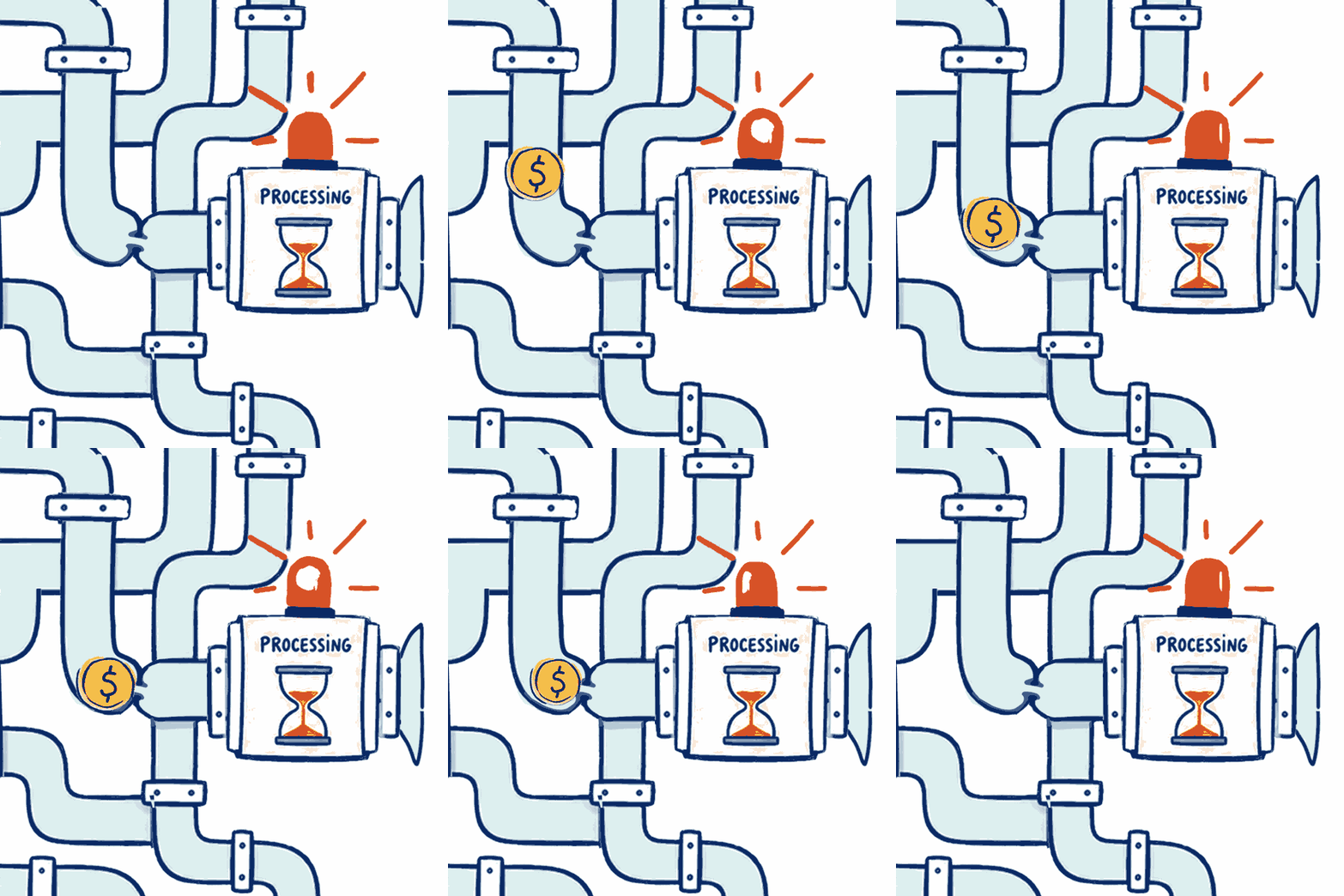
Paradigm and other network payers have inserted themselves into the payment flow between workers' comp payers (insurers, TPAs, and self-insured employers) and the healthcare providers who actually treat injured workers. Their business model is simple: intercept employer dollars flowing from payers to doctors and extract profit for private equity investors.
Paradigm pools funds derived from hundreds of employers, imposes its reductions, and disburses the remainder to providers. Paradigm provides no treatment to the injured worker, who effectively functions as an annuity that profits Paradigm.
When insurers and TPAs route payments through Paradigm, it is unclear what, if anything, employers are told about how much of their money funds actual medical care and how much flows to private equity profits.
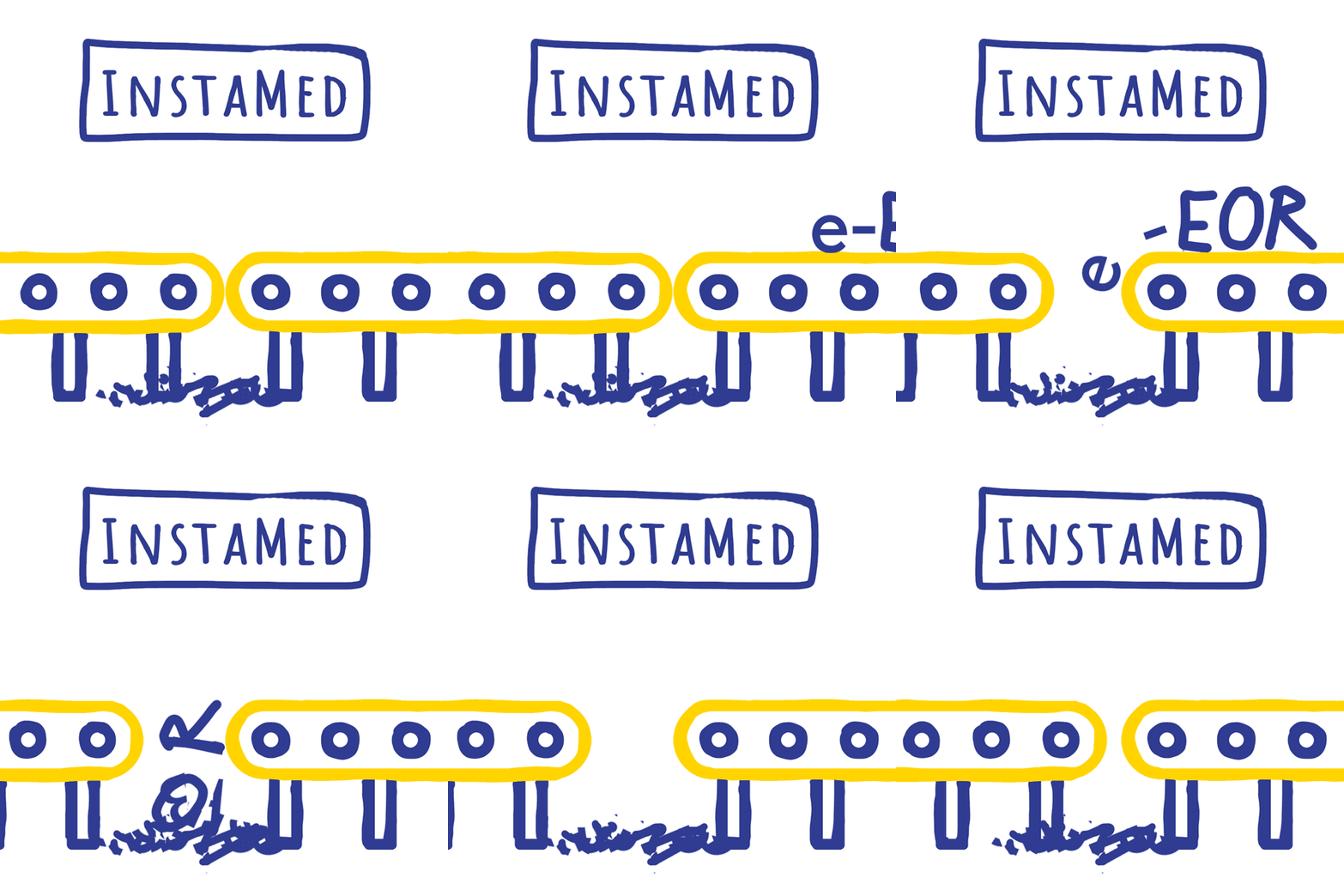
Worse, Paradigm’s habit of bundling payments and issuing gargantuan ‘Frankenstein’ Explanations of Review (EORs) covering hundreds of bills imposes enormous manual work on providers, driving them out of the system and making care harder to access.
As one daisyBill provider put it, Paradigm is “driving me nuts.”
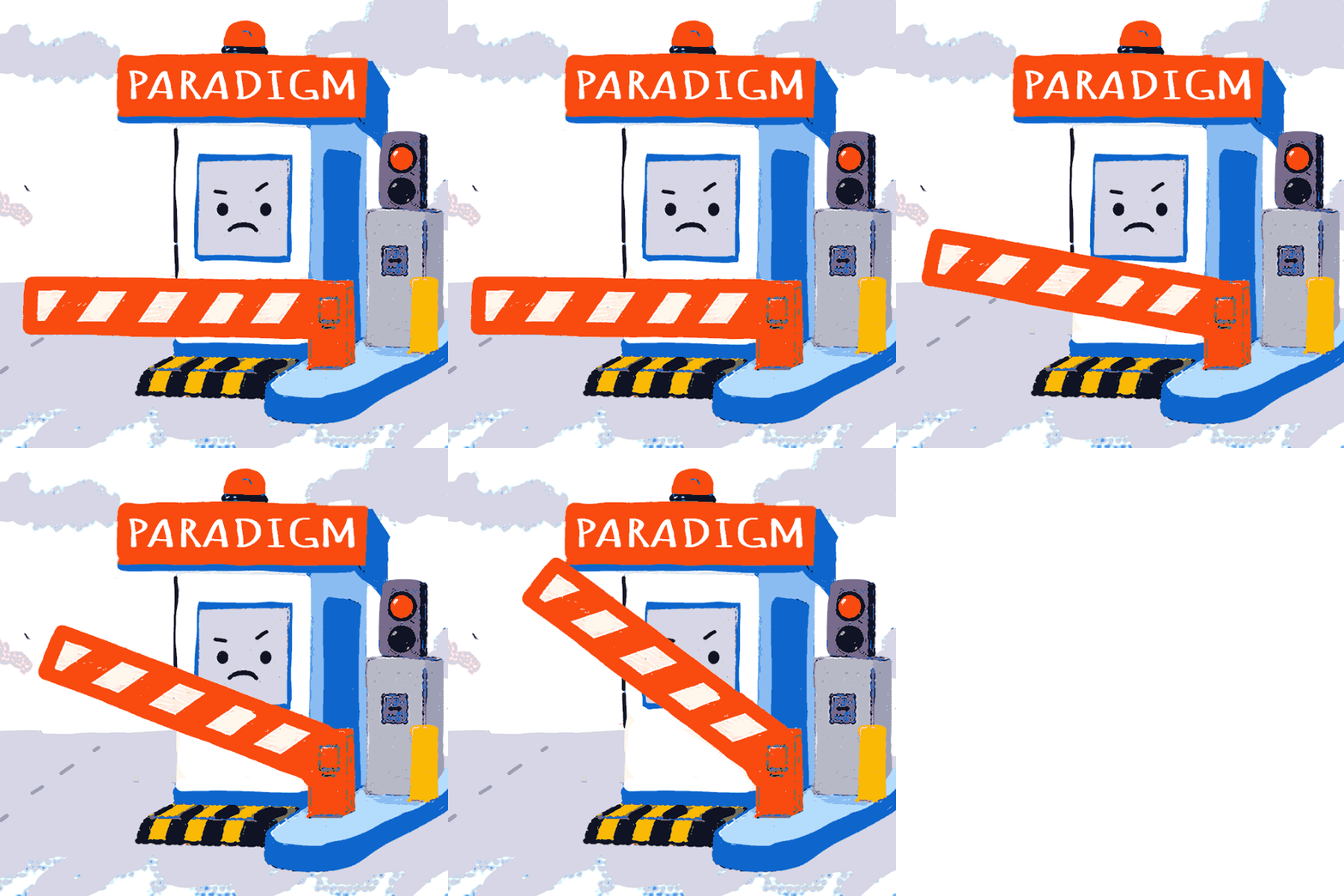
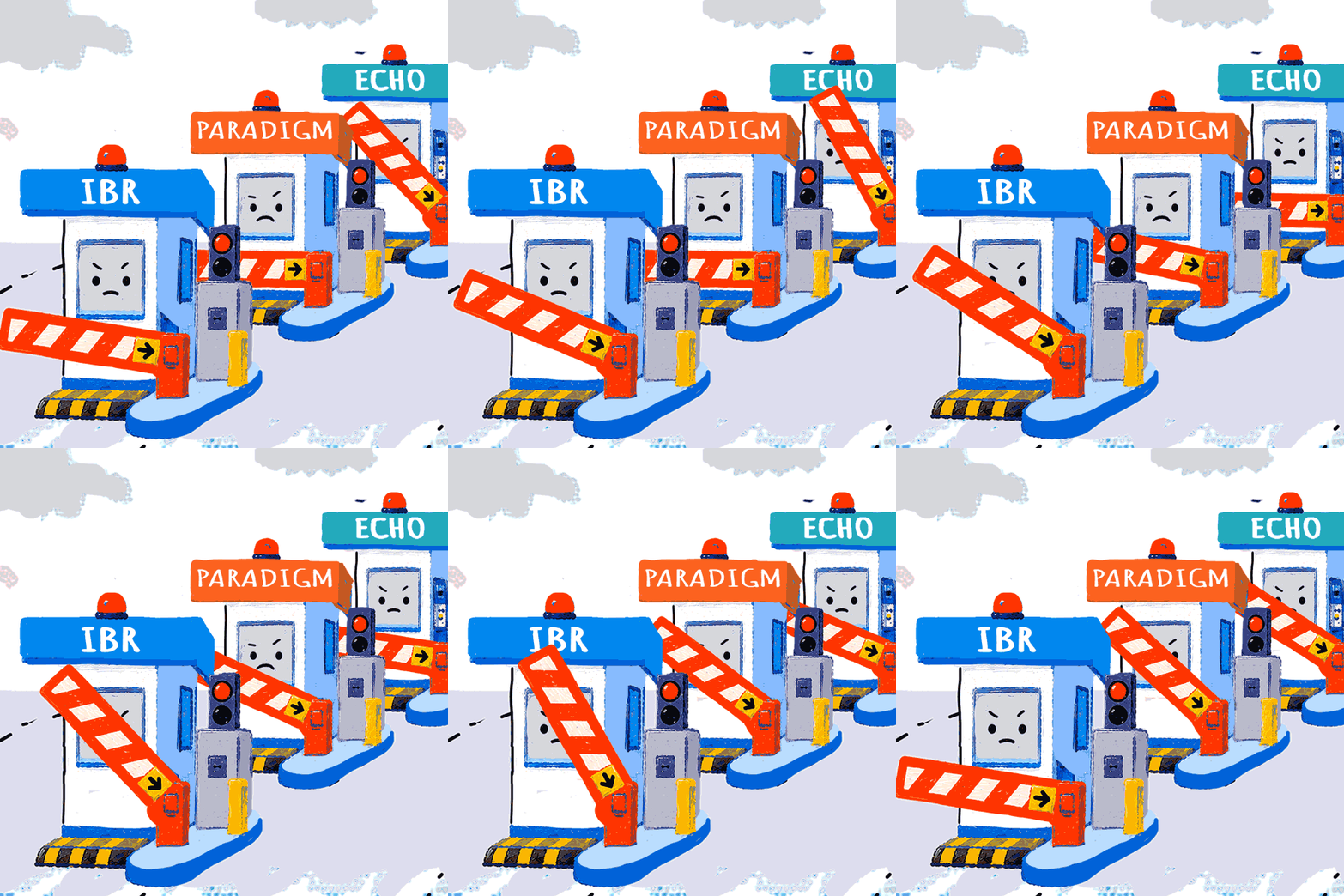
Paradigm: The Toll Collector on the Road to Reimbursement
Here is what actually happens when an insurer or TPA routes a provider’s bill for treating an injured worker through Paradigm:
- The insurer or TPA pays Paradigm, not the provider who actually rendered treatment.
- Paradigm pools funds from multiple payers representing hundreds of employers.
- Paradigm takes its cut, then issues massive, bundled payments to doctors. A single Paradigm payment we examined covered 140 different employers.
- Paradigm fails to reimburse the provider in a timely manner per state law.
- Paradigm sends the provider a legally non-compliant EOR covering hundreds of different bills, imposing massive amounts of needless administrative work on practices.
In exchange for its cut of the funds intended to pay for workers’ treatment, Paradigm provides no treatment to those workers. It simply sits in the road between payer and provider, taking its toll.
The imposition on providers has a real impact. In response to a recent daisyNews article on Paradigm, a provider reached out to express how unnecessarily difficult Paradigm makes their work:
The needless administrative friction Paradigm creates may drive providers "nuts," but it also drives Paradigm’s profit.
Private Equity: Cashing In on Employer Claims
All this friction and opacity arguably serve no purpose for employers or injured workers. However, it serves Paradigm and its investors incredibly well.
Private equity firm Patient Square Capital is acquiring Paradigm, describing the company in a recent press release as “...a specialty care management organization focused on delivering solutions that improve outcomes for individuals with complex injuries and diagnoses…”
Based on the experience of our providers, the only “outcomes” of Paradigm’s involvement in a claim appear to be:
- Systematic violations of California payment laws and regulations
- Reduced reimbursements for providers who actually care for injured workers
- Profits flowing to private equity investors rather than to injured worker care
This profitable inefficiency is a feature, not a bug, of the business model.
Paradigm’s pending acquisition strongly suggests that it’s working. Unfortunately, it comes at the expense of injured workers who struggle to find doctors willing to treat them, doctors being squeezed out of a system they can’t afford to participate in, and employers who face rising premiums resulting from bloated administrative costs.
How CA Employers Can Demand Better
California employers are the ultimate source of funding for this broken system. They have the leverage and the responsibility to demand accountability from every entity that profits from their premiums. Specifically, employers can:
Insist on a full accounting from TPAs and insurers. Employers are entitled to line-item transparency for every dollar spent on a claim. If a TPA or insurer routes payments through Paradigm or any other network payer, employers should know how much of that money reached actual providers and how much was retained by intermediaries.
Understand the compliance exposure. When vendors like Paradigm violate California payment laws (e.g., failing to pay providers within 15 working days of an e-bill, or failing to send compliant electronic EORs), state regulations place the legal responsibility firmly on the payer. Every employer should insist that whoever handles their claims is fully compliant with the California Labor Code and workers’ comp payment regulations.
Question the real cost drivers. Employer premiums went up by 8.7% last year. Insurers have requested an additional 10.4% hike for this year. These significant consecutive increases are not solely (or even primarily) the result of upticks in medical costs, which remain stable. Every dollar that funds redundant administrative services, every doctor pushed out of the system, and every legal battle over care that is delayed or denied increases the costs of claims. Those rising costs serve as insurers’ justification for premium hikes.
Of course, network payers like Paradigm aren’t the only friction points degrading the system. They combine with Preferred Provider Organizations, Medical Provider Networks, and the abject non-enforcement of payment laws and regulations to create the current, catastrophic state of California workers’ comp. Regardless, employers are in the best position to demand better, for the sake of their employees and their own bottom lines.
Correction (June 26, 2026): A previous version of this story stated that employers are unable to verify how much of their workers' comp dollars flow to Paradigm versus to medical providers. In fact, daisyNews has no visibility into the accounting Paradigm provides to employers regarding the allocation of workers' comp funds. We encourage all California employers to request a full accounting from their insurers, TPAs, and any network intermediaries of how their workers’ comp dollars are allocated between intermediary fees and actual medical care.
Also, after daisyNews published a series of stories about Paradigm’s role in the claims process, lawyers for Paradigm demanded that we take the stories down, arguing that they falsely accused Paradigm of criminal conduct. We do not believe the stories, as originally published, made any such allegation. To avoid any misunderstanding, however, we clarify that the reporting was never intended to suggest that Paradigm’s contractual fee reductions are illegal.
daisyBill gets providers paid faster and more accurately for treating injured workers. Click below to learn more:
BILL BETTER: DAISYBILL
DaisyBill provides content as an insightful service to its readers and clients. It does not offer legal advice and cannot guarantee the accuracy or suitability of its content for a particular purpose.
.gif)