Maryland: Pharmacy Calls State's Largest Comp Insurer “Grossly Negligent”
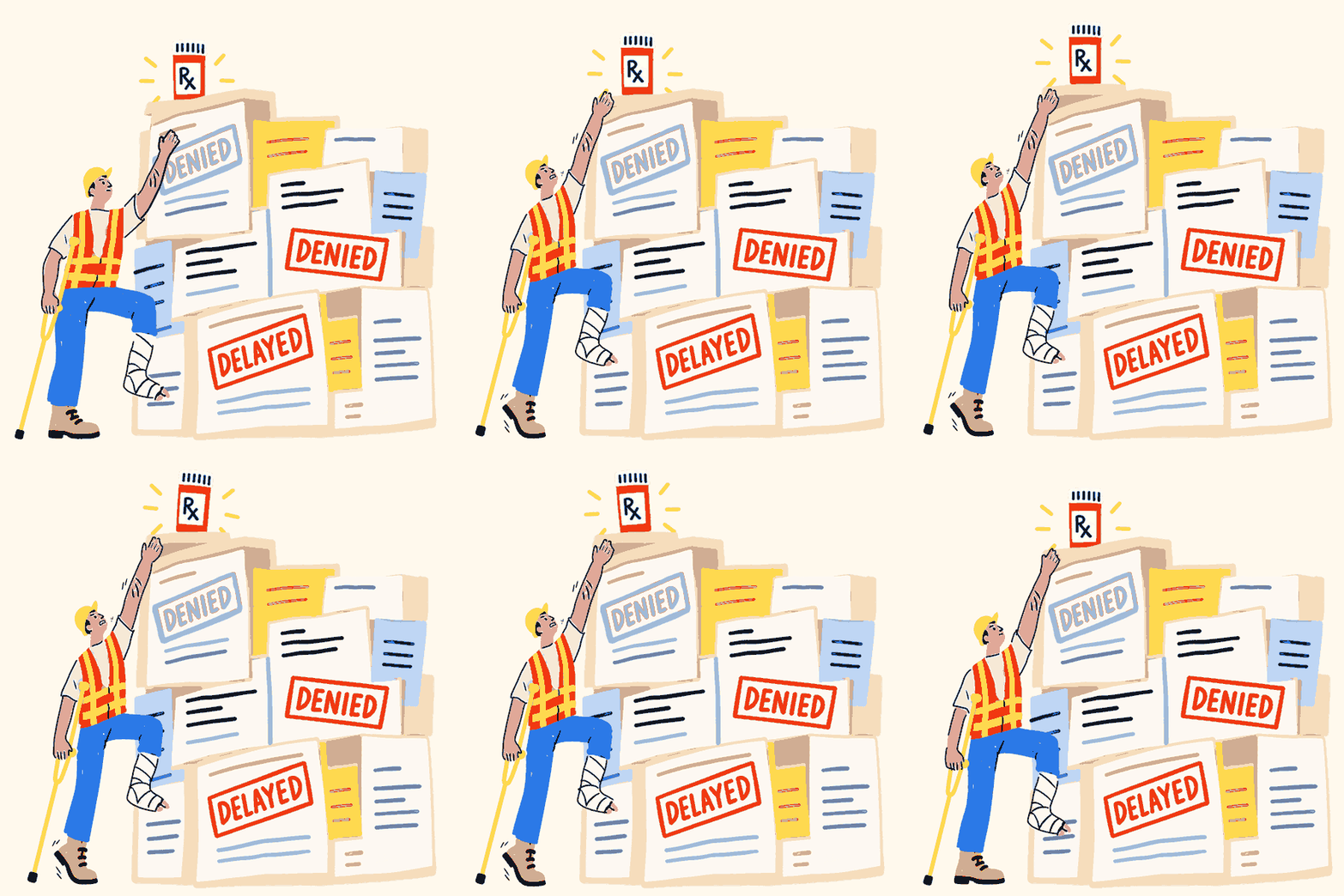
RescueMeds, an independent pharmacy (and daisyBill client) that, according to the Baltimore Sun, “sees its role as filling gaps left by workers’ compensation delays,” fills prescriptions even when the insurer denies them, choosing to deliver medications first and fight reimbursement battles later.
RescueMeds is one voice among several crying foul at the delays and denials of care that injured Maryland workers face, particularly those covered by the state’s biggest comp insurer, Chesapeake Employers’ Insurance Co.
Chesapeake is Maryland's private, non-profit workers’ comp insurer of last resort, having taken over that role from a state-run entity, the Injured Workers’ Insurance Fund (IWIF). The IWIF continues to administer claims for employees of the state, which functions as a self-insured employer.
According to the Sun, both Chesapeake and the IWIF face accusations of failing to promptly deliver the care and benefits injured workers need.
RescueMeds CEO Colleen Shields asserts that Chesapeake faces “little to no oversight” and notes its unique relationship with the state. With a convoluted web of oversight responsibilities split among multiple government entities, Maryland arguably lacks any mechanism that truly holds Chesapeake or the IWIF accountable for their performance.
Meanwhile, the Sun details stories of municipal and state first responders injured in the line of duty and needlessly suffering while waiting on approval for treatment.
“They Go Out of Their Way to Not Pay Anything”
In a recent article, the Sun spotlights injured first responders who claim to face serious roadblocks to getting care, with one State Trooper stating plainly, “They go out of their way not to pay anything.”
- Christopher, a former municipal police officer with post-traumatic stress disorder (PTSD), depression, and panic attacks stemming from a violent incident in the line of duty, claims he sometimes waits months for approvals for psychiatric care and depends on RescueMeds to get medications while waiting on insurer approval.
- Derek, a former State Trooper who had a stress-related heart attack while working on a bomb squad, has had to pay out of pocket for treatment.
- An unnamed volunteer firefighter struggling with PTSD has a claim that Shields expects to drag on for at least another year; RescueMeds is filling the necessary prescriptions at no cost to the firefighter.
Shields reports that RescueMeds and other similar providers take financial risks to support injured workers, going months or years without payment, or not getting paid at all.
Moreover, Shields claims that Chesapeake reimburses RescueMeds at 32% of billed charges on average, which is often less than the pharmacy pays for the medications.
No Oversight = No Accountability
Shields suggests that Chesapeake’s huge market share and special relationship with the state through the IWIF gives it the muscle to get away with mistreating providers and injured workers, telling the Sun (emphases ours):
“There is little to no oversight over Chesapeake, or their performance as it relates to the treatment of injured workers — especially their primary book of business being the Maryland State employees. They are grossly negligent in their care of injured workers.”
While state employees are covered by the IWIF-administered trust rather than insured by Chesapeake, the lines between the two entities are blurred at best. A 2020 Fiscal and Policy Note states that “Chesapeake and IWIF administer the program together,” and Chesapeake’s chief legal officer responded to criticisms on behalf of both organizations, stating:
“Neither Chesapeake Employers nor IWIF, have been notified by the Workers’ Compensation Commission of any systemic complaints of delays or denials involving access to medical treatment or prescriptions…”
There is no concrete proof of negligence or other wrongdoing by either entity. However, the reason may be a lack of oversight rather than a lack of wrongdoing. The Sun notes that half a dozen reports from the Office of Legislative Audits “could not demonstrate whether claims payments and administrative charges had been properly handled.”
While the bureaucratic picture may be opaque, the facts on the ground are clear:
- Injured workers are going without the care they need, or receiving it only after major delays and/or at their own (or the provider’s) expense.
- At least one independent provider has stated that it has chosen to offer medication regardless of approval or denial, at its own financial risk, and chases the state’s largest comp insurer through the legal system for reimbursement.
- The state of Maryland has not produced analyses that conclusively affirm adequate performance by the IWIF or Chesapeake.
The workers’ comp system cannot function on blind trust in insurers and principled financial risk-taking by providers. Maryland’s injured workers deserve a state government that holds its chosen insurer of last resort and its own self-insurance claims administrator accountable.
daisyBill tracks every bill and payment so you can follow up on missing revenue. Click to see how:
BILL BETTER: DAISYBILL


DaisyBill provides content as an insightful service to its readers and clients. It does not offer legal advice and cannot guarantee the accuracy or suitability of its content for a particular purpose.
.gif)

.gif)
Thank you for paying attention. I have been working for several years to get lawmakers to notice a $87 Million no bid contract to a company that's failed every audit since my son was born- he's 20 years old. "Propriety of amounts not-verified", repeatedly stated by the Office of Legislative Audits in the State Treasury's audit, yet Chesapeake Employers Insurance continues to have the contract with no Board of Public Works approval, no procurement oversight and no consequence of whether they are actually providing sufficient care and coverage, under a contract signed in 1990. Their percentage of loss ratio is a mere 8.4%, while the other MD insurers are 28.9% according to Maryland Insurance Administration...It's a stark illustration of a problem and a consistent pattern of delays and denials designed to make the injured workers and the providers give up. Thank you for helping bring it to light. Keep fighting my friends, because if we don't, who will?