Predicting Attorney Involvement in Comp Cases
.gif)
A study of 400,000 workers’ comp claims from Crosstie, a claims management technology company that identifies workers’ comp cases likely to descend into litigation, reveals a telling pattern that could help explain excessive claim costs nationwide, especially in California.
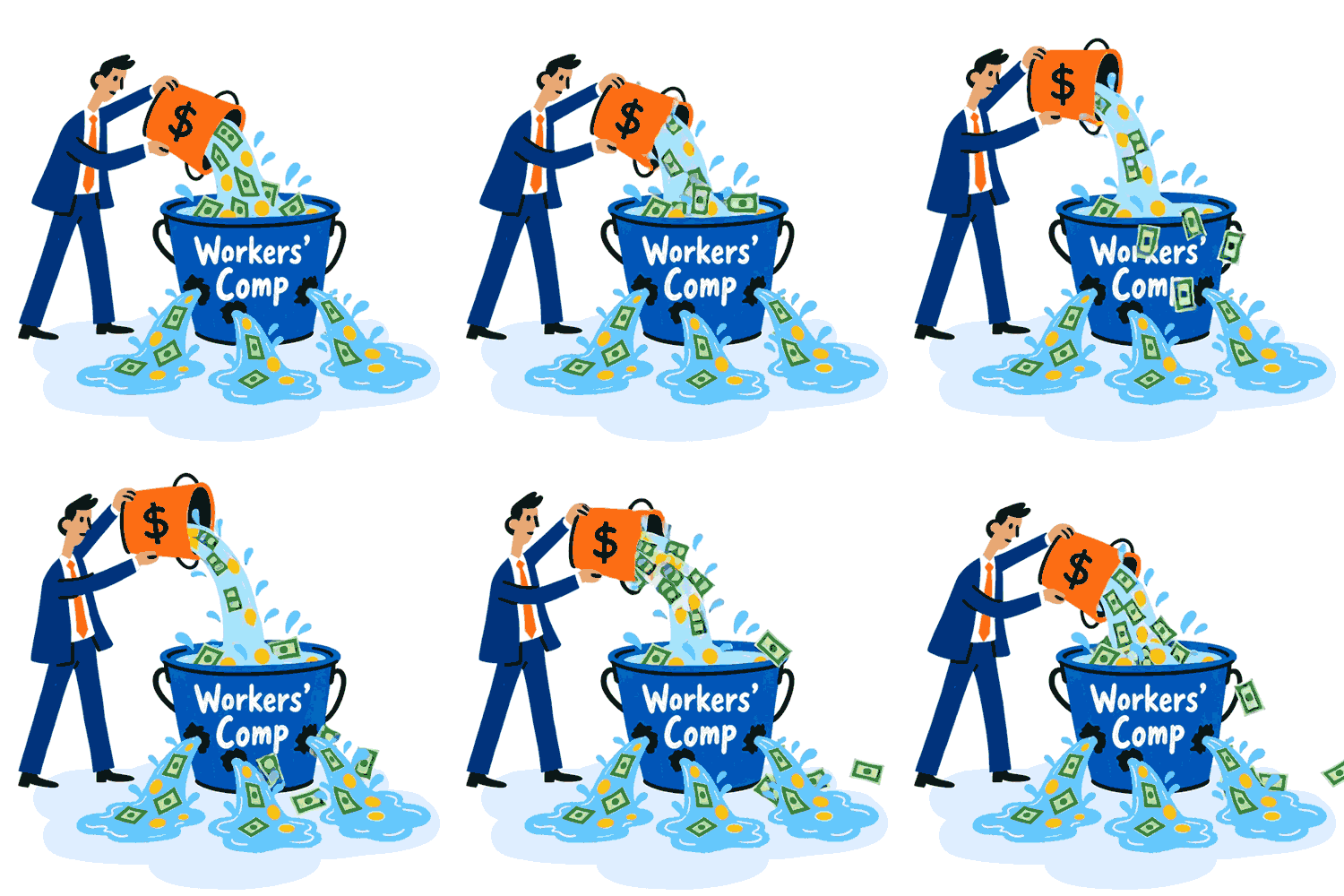
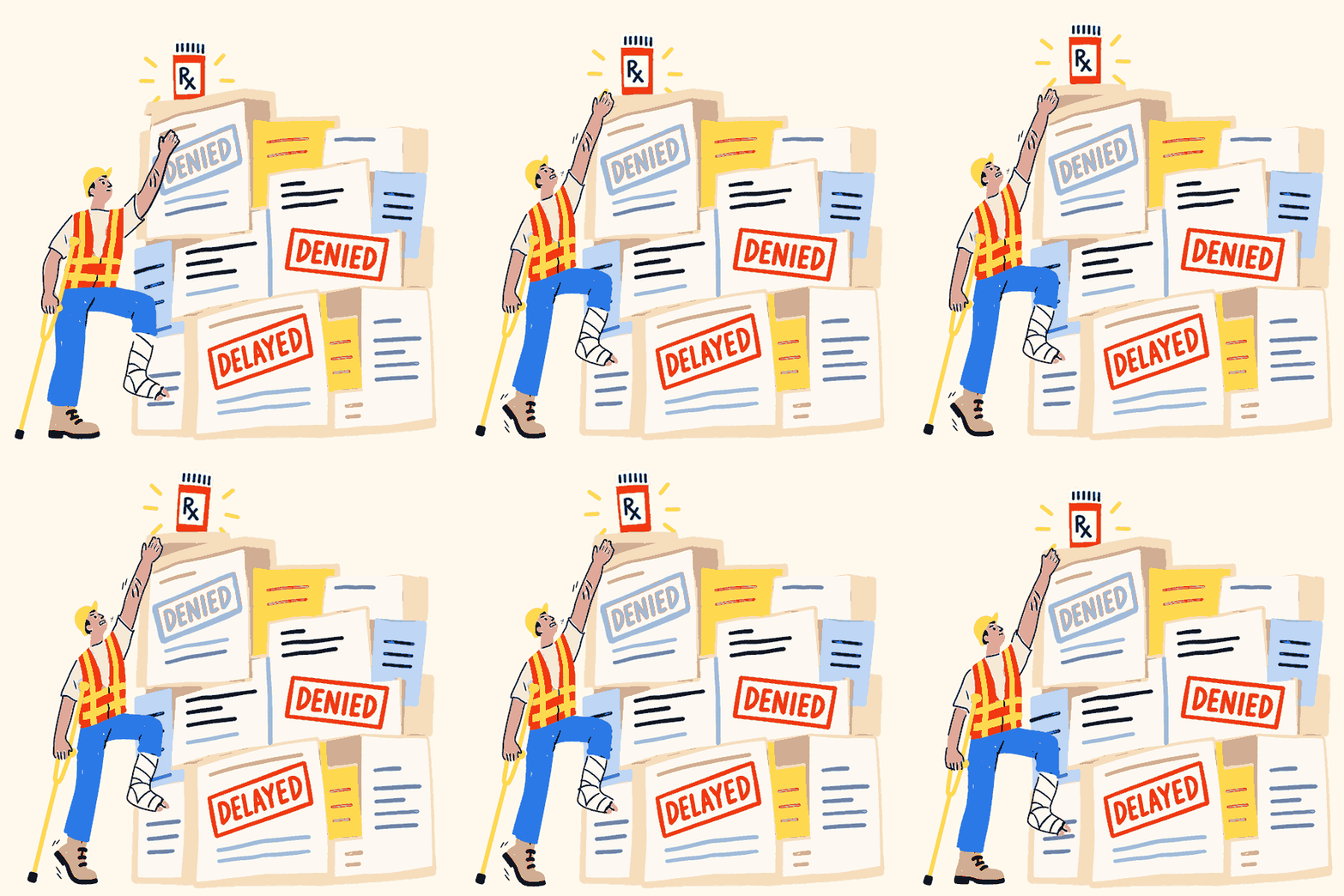
Litigation consumes a significant percentage of the employer dollars spent on comp claims, with injured workers lawyering up and going to the mat when payers delay or deny care and benefits, particularly over the objections of their treating physicians.
Crosstie’s research demonstrates that many of these employer legal costs may be needless.
Analyzing emails, texts, calls, medical records, and more, Crosstie (a payer vendor with no affiliation to daisyBill) identified five distinct “warning signs” that correlate with attorney involvement in an injured worker’s claim. The two most common were failing to communicate with the injured worker about their claim status and delays in medical treatment.
The report notes that attorney involvement rates in California were double the overall average. That’s no surprise to daisyNews, and it should not surprise our readers.
In California, a broken Medical Provider Network (MPN) system lets payers restrict injured workers to certain providers and can make it a nightmare to find and schedule an appointment with an eligible physician. An equally broken Utilization Review (UR) delays injured workers’ access to care because providers must obtain payer approval for all treatment, from a splint to an X-ray to spinal surgery. Failure to obtain prior authorization means that the provider will not receive payment for the treatment.
The Crosstie report is an important insight all employers should consider when an injured worker seeks legal representation.
Poor Claims Management Drives Litigation
By combing through its data, Crosstie identified five distinct factors that serve as clear warning signs of impending attorney involvement. The first warning sign appears at a median of four months before an attorney enters the scene. They include:
- Non-responses and other failures to communicate with the injured worker
- Delays in medical treatment
- Disputed return-to-work
- Compensability denials
- Indemnity benefit denials
Of the attorney-involved claims in their dataset, 61% had an identifiable communication breakdown, with injured workers waiting for status reports, responses to messages, or a simple phone call. The second-most common warning sign was delays in medical treatment, an experience with which too many injured workers in California are familiar.
According to Crosstie, communication breakdowns and treatment delays increase the odds of a lawyer getting involved by 23% and 19%, respectively.
While correlation doesn’t mean causation, these data may indicate that payers can significantly reduce the legal costs of a claim – by treating injured workers as human beings who deserve answers about the status of their claim and are entitled to prompt, appropriate medical care.
California: Land of Unnecessary Comp Battles
Non-treatment, non-benefit comp losses are through the roof in California. That’s driven in no small part by litigation, as the most recent Workers’ Compensation Insurance Rating Bureau (WCIRB) State of the System report (below) shows in its assessment of insurers’ Allocated Loss Adjustment Expenses (ALAE).
The WCIRB notes that California ALAE costs are more than double the national median, driven largely by “High rates of legal representation on claims…”
According to the same report, attorney expenses on both sides of the claim accounted for 38% and 37% of “Frictional” comp costs in 2024 and 2025, respectively.
Add layers and layers of private equity-backed third-party claims administrators and vendors gumming up the works, and an injured worker’s wait for medical treatment can be long.
Much of the inefficiency and non-compliance driving California comp litigation is controllable; California just isn’t controlling it. Employers should demand better from the state.
daisyBill gets providers paid faster and more accurately for treating injured workers. Click to see how:
BILL BETTER: DAISYBILL

DaisyBill provides content as an insightful service to its readers and clients. It does not offer legal advice and cannot guarantee the accuracy or suitability of its content for a particular purpose.