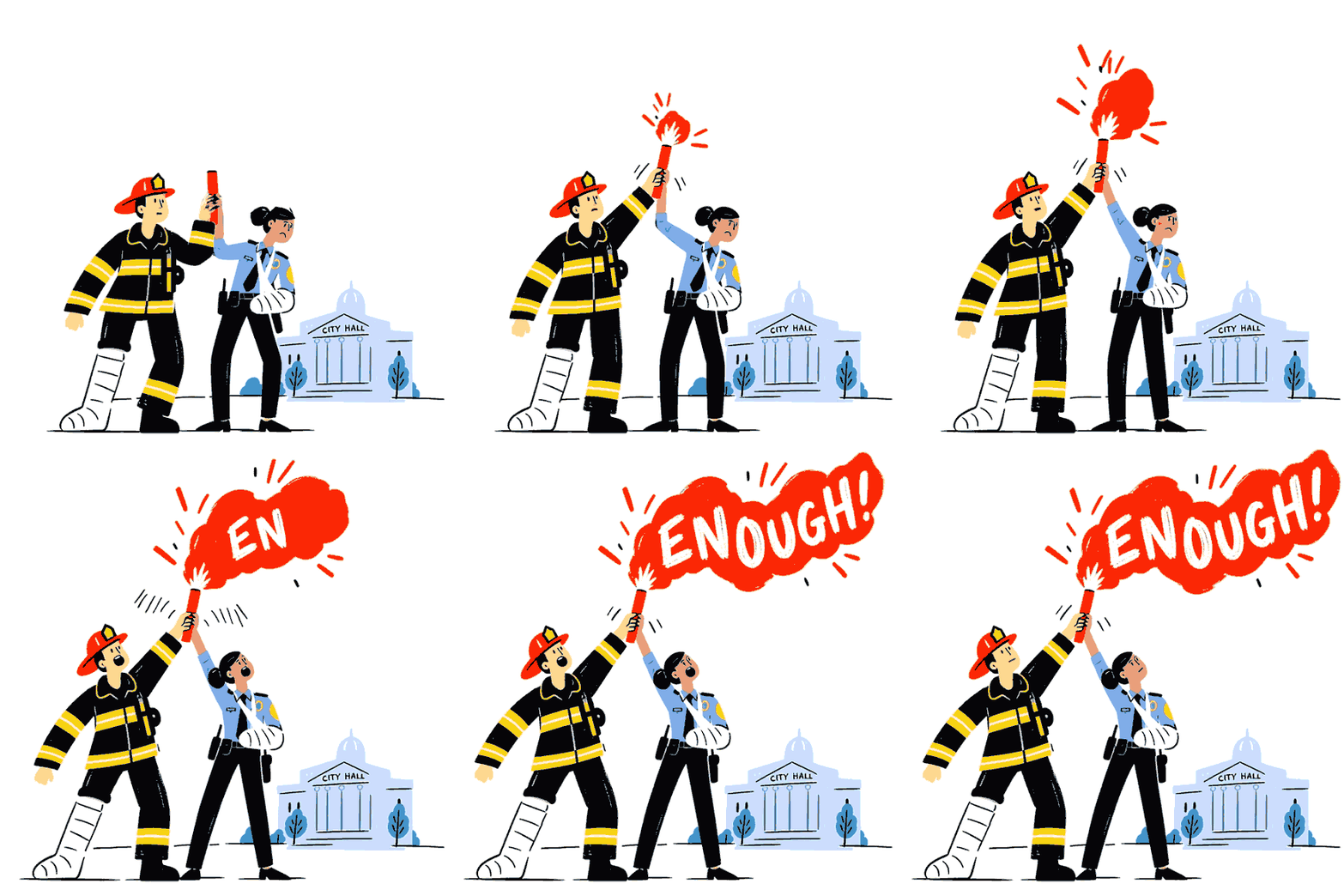
Sedgwick Reverses Teacher’s Injury Denial Following Media Coverage

An apocryphal quote attributed to Winston Churchill holds that Americans will always do the right thing, but only after they’ve tried everything else.
Churchill probably never said it, but it may describe the nation’s largest workers’ comp Third-Party Administrator (TPA), Sedgwick Claims Management Services, Inc., which once again refused to pay for an injured worker’s treatment, but reversed course after the media spotlighted the case.
In November of last year, Keith Cooper, a teacher at Chapel Hill High School in North Carolina, suffered a heart attack immediately after putting out a fire in his school. ABC11 reported that Sedgwick initially accepted Cooper’s claim, then reversed its decision, asserting that there was “no injury by accident in the courses/scope of employment.”
Cooper hired an attorney, who shared a letter with Sedgwick from Cooper’s cardiologist, who asserted that the fire was the cause of the heart attack. Sedgwick stuck to its denial.
With the claim headed for a hearing and medical bills piling up, Cooper turned to the media to bring attention to the case. Nearly a year after the fire, ABC11 aired a “Troubleshooter” segment on Cooper’s battle. Two days after the segment, Sedgwick approved the claim.
This is the same Sedgwick against which a Texas city council member declared “war” after the TPA refused to pay for treatment for multiple injured first responders. It’s also the same Sedgwick that deleted marketing materials boasting that over half of the treatment requests doctors submitted to it were denied or withdrawn, following a daisyNews exposé.
Cooper had a sympathetic story, an attorney, and local media in his corner. Most injured workers don’t have those advantages. Sedgwick ultimately did the right thing after the cameras rolled. The question is what Sedgwick does when the public isn’t watching.
Sedgwick to Injured Teacher: Not Our Problem
When a colleague told him about a fire in the boys’ bathroom, Cooper grabbed an extinguisher and put it out. Almost immediately, he experienced a tightness in his chest. An ambulance took him to the hospital, where doctors determined he had suffered a heart attack.
Sedgwick initially accepted the claim, but later denied it, stating there was “no injury by accident in the courses/scope of employment.”
Cooper then did what far too many injured workers must do: he hired an attorney.
The attorney appealed the denial and sent Sedgwick Cooper’s medical records, including a letter from Cooper’s cardiologist, who, according to ABC11, asserted that the stress of the fire induced the heart attack. The cardiologist also asserted that the heart attack had done permanent damage necessitating lifelong treatment. Sedgwick apparently maintained its position that the injury wasn’t work-related.
With a hearing on the horizon, Cooper took his story to ABC11. Within 48 hours of the news segment, Sedgwick reversed its denial.
As Cooper’s attorney told ABC11 (emphases ours):
“The story dropped on, what, September 29th? I got a call October 1st that the claim was being approved. The only thing that happened, you know, between taking the position that the claim was going to be denied and needed to go to trial, and then them changing their mind on October 1st is the news story.”
Sedgwick did not respond to ABC11’s request for a comment.
Sedgwick’s Fraught Relationship With Injured Workers (and Providers)
Cooper’s story echoes that of Fort Worth, Texas firefighter Caleb Halvorson. Sedgwick refused to pay for some of Halvorson’s out-of-network care until sustained media coverage generated significant public outcry.
Multiple Fort Worth first responders described similar experiences with Sedgwick denials, leading one city council member to “declar[e] war” on the TPA.
Labor groups and worker advocates have formally accused Sedgwick of abuse:
- Transport Workers Union (TWU) Local 100, which represents New York City transit workers, called Sedgwick a “predatory company” and “a menace” to injured workers.
- TWU Local 579 passed a formal resolution asserting that the “unprofessional, uncourteous, and uncaring” Sedgwick had “abused, ignored, mistreated, disrespected, and caused pain [to]” its members.
- 9/11 Health Watch accused Sedgwick of impeding care for first responders by improperly denying payment to healthcare providers, delaying treatment, losing records, and ignoring calls from patients seeking care.
Providers also bear the consequences of Sedgwick’s failures to approve necessary care.
When a payer accepts a claim and then reverses itself, providers are left to chase reimbursement for care delivered in good faith. Cooper paid thousands out of pocket for his care, which not every injured worker is willing or able to do (and which no injured worker should have to do).
Moreover, daisyNews has extensively documented Sedgwick’s long-standing, widespread non-compliance with payment laws and regulations, including many instances of applying invalid contractual discounts to bills for injured workers’ treatment. daisyBill has formally reported hundreds of thousands of specific violations to state regulators, and maintains years of data documenting Sedgwick’s non-compliant practices.
Media Scrutiny Shouldn’t Determine Care
Cooper had an attorney, a cardiologist’s firm opinion on work-relatedness, and sympathetic media coverage about a teacher acting in the interest of students’ safety.
Even with all of that, it took nearly a year from the date of the incident for Sedgwick to accept its obligation to cover the necessary treatment.
Imagine the warehouse worker, the home health aide, or the retail clerk with limited resources and a less newsworthy narrative. For many injured workers, there is no effective recourse when a payer delays or denies acceptance of liability or specific medical treatments.
Given Sedgwick’s share of the market, its conduct has serious consequences for injured workers, the providers who treat them, and the workers’ comp system as a whole. We can’t say what it will take for Sedgwick to change its ways, but this case may suggest that a little public shame goes a long way.
daisyBill gets providers paid faster and more accurately for comp patients. Click below to see how.
BILL BETTER: DAISYBILL

DaisyBill provides content as an insightful service to its readers and clients. It does not offer legal advice and cannot guarantee the accuracy or suitability of its content for a particular purpose.