Tennessee Just Showed the Way For California to Fight PPOs
California employers are getting fleeced twice over.
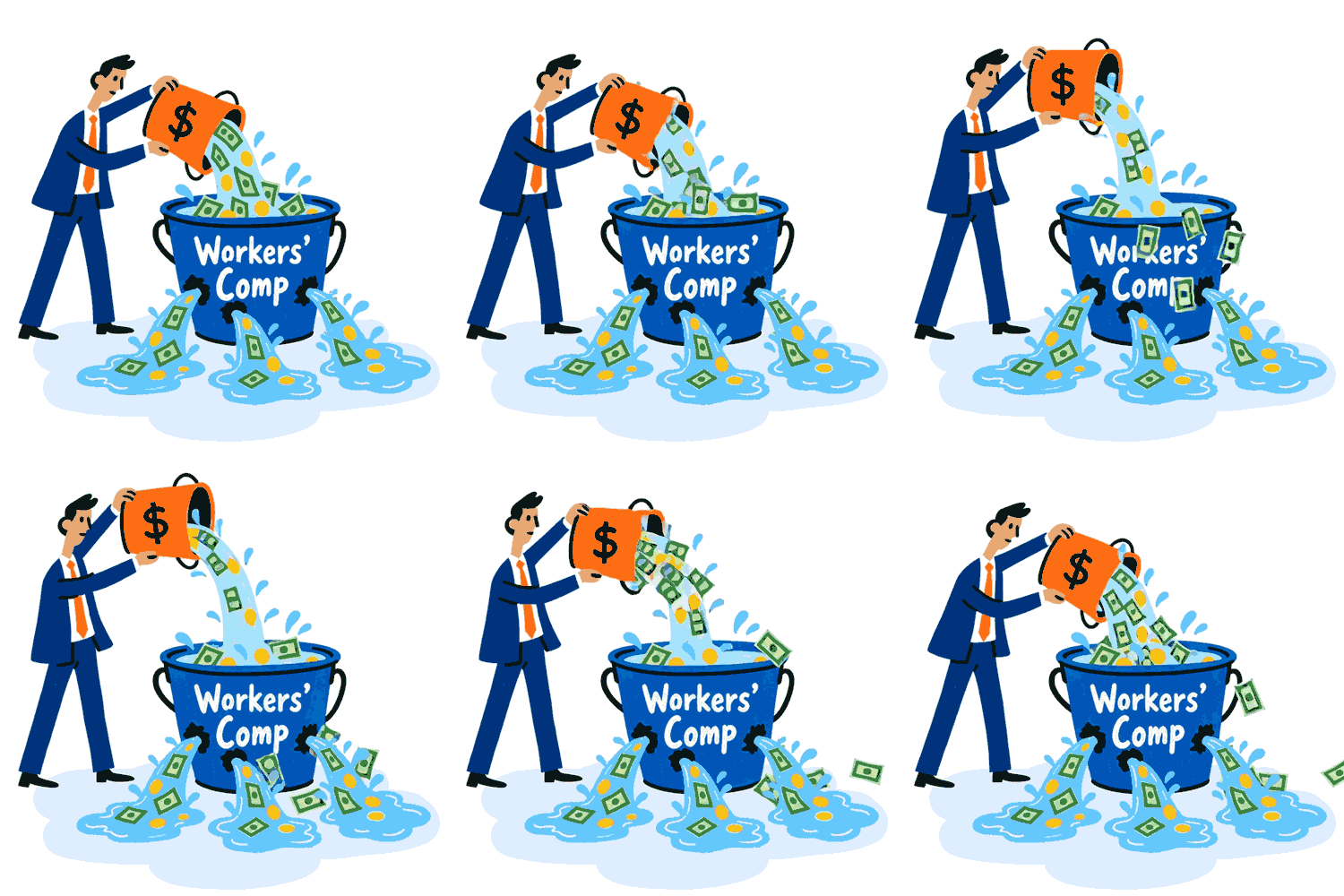
First, the Workers' Compensation Insurance Rating Bureau (WCIRB) recommended a 10.4% premium hike on top of last year's 8.7% increase, asking employers to pour even more money into California's workers' comp system. The WCIRB, which is governed by the very insurers that profit when premiums rise, offered justifications that fall apart on close inspection.
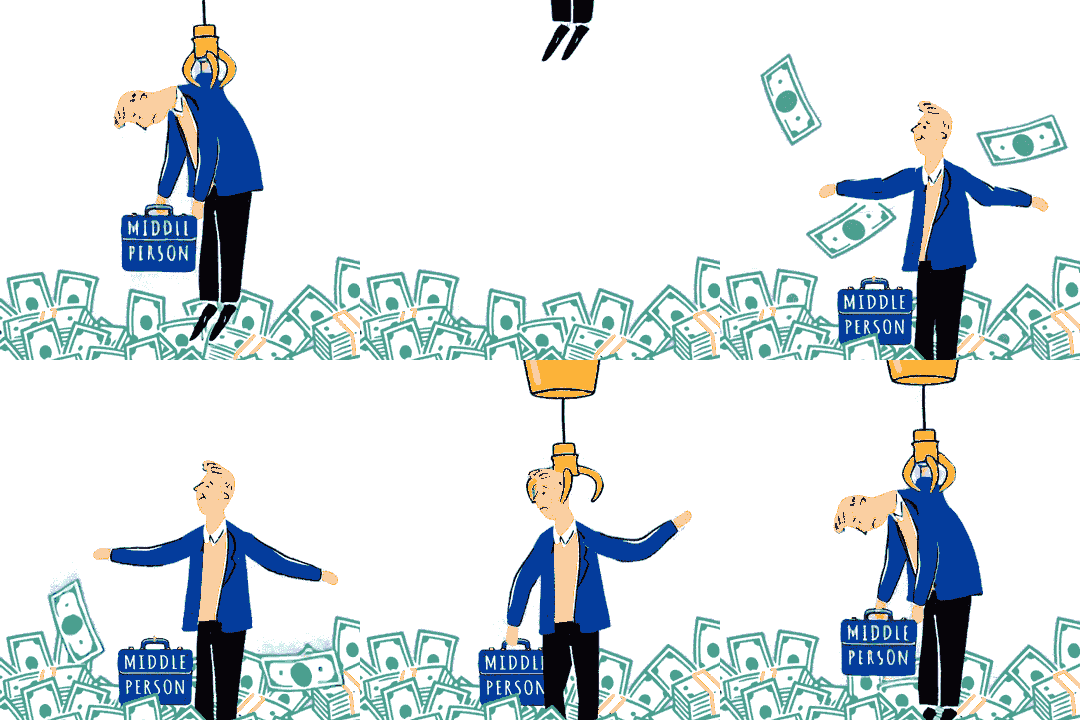
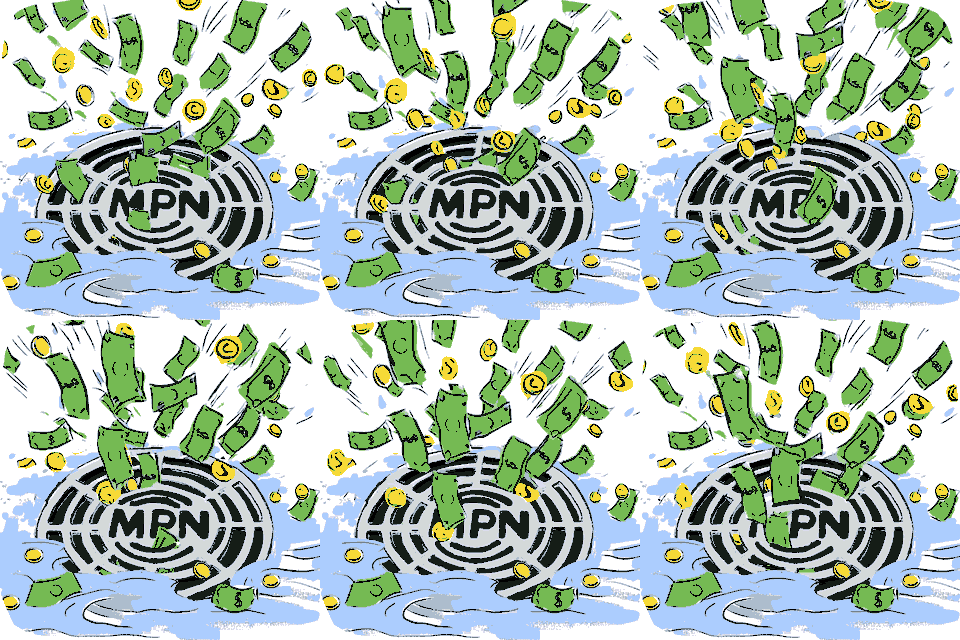
Second, and more infuriating: a significant portion of what employers pay never reaches the doctors who treat their injured workers. It's diverted midstream by Preferred Provider Organizations (PPOs), administrative middlepeople who contribute nothing to an injured worker's recovery.
daisyBill's live reimbursement data demonstrate the scale of the problem. Since January 1, 2022, across more than 9.5 million treatments, payers owed California providers $1,171,552,090 in reimbursement under the state fee schedule. They received $973,394,561. That leaves $198,157,528 in employer-funded reimbursement that never reached the doctors who treated injured workers.
Instead, that difference funded PPOs and other discount networks that provided no medical services whatsoever. Providers, on average, receive just 83 cents of every dollar the state deemed reasonable compensation for treating injured workers.
The consequence is predictable and well-documented: doctors can't afford to stay in workers' comp. Employers pay more, injured workers struggle to find care, and PPO middlepeople profit handsomely from the dysfunction. None of this shows up in the WCIRB's justifications for the premium hike, because unlike daisyBill's publicly available data, the WCIRB's underlying data is self-reported by insurers and unavailable for public scrutiny.
It doesn't have to be this way. The state of Tennessee just proved it.
The PPO Problem: Employers Pay, PPOs Profit
In California, the Official Medical Fee Schedule (OMFS) establishes appropriate reimbursement rates for treating injured workers, based on the extraordinary practice expense of taking on workers’ comp patients.
PPOs effectively intercept those payments.
To compel providers to sign PPO discount contracts, PPOs leverage Medical Provider Networks (MPNs). By making MPN membership conditional on PPO participation, PPOs threaten providers with loss of eligibility to treat injured workers, unless they accept PPO discounts.
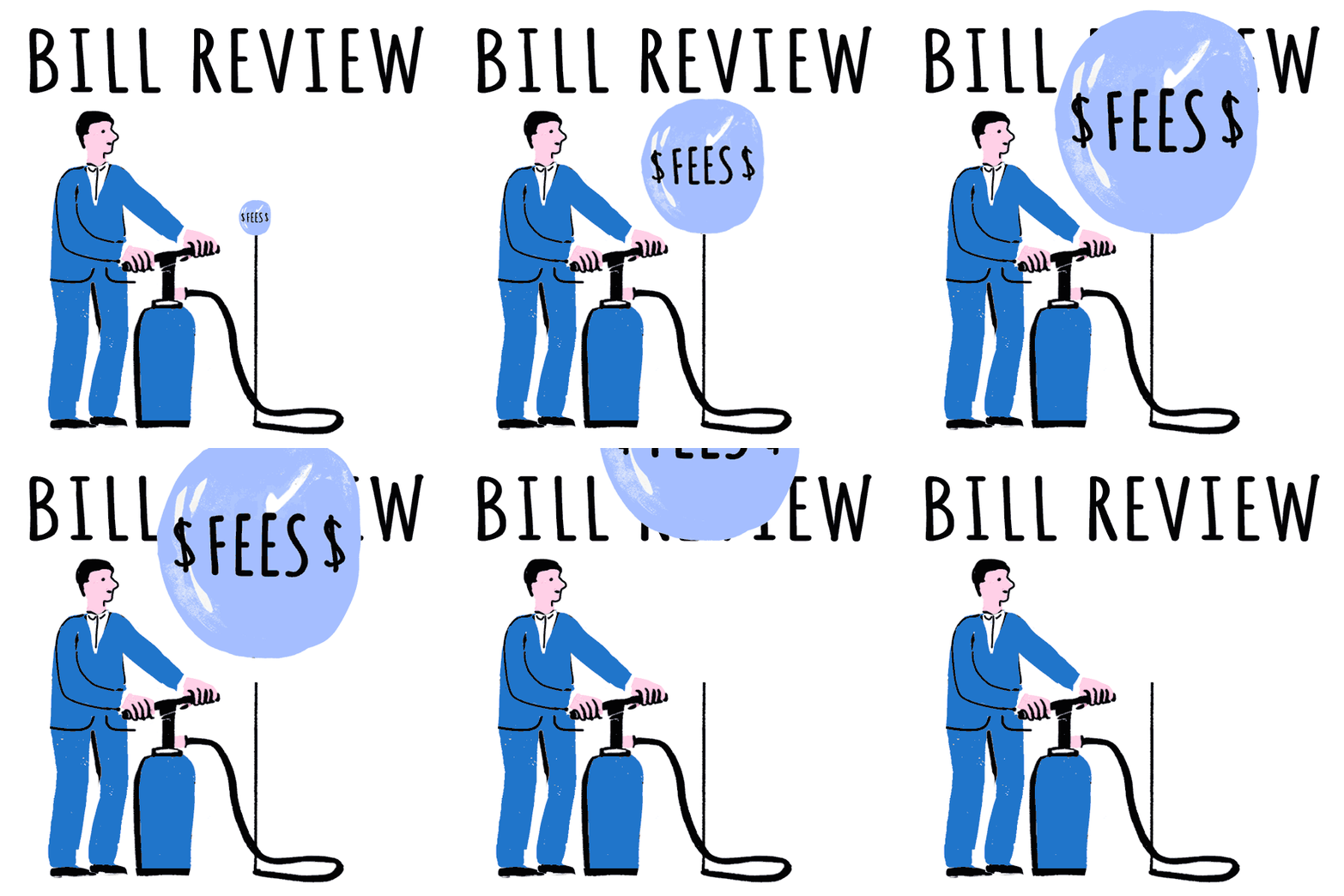
Once a provider signs a PPO contract, the abuse compounds. Contractual discounts are traded, sold, and leased to laundry lists of claims administrators, bill review entities, and other entities, often without the provider's knowledge or meaningful consent.
California Labor Code Section 4609 theoretically prohibits this "silent PPO" discount-peddling, but enforcement is virtually nonexistent. When providers challenge unsubstantiated discounts, they frequently discover that the payer can't produce the signed contract that supposedly authorized the reduction, and that California offers no reasonable recourse to recover the stolen reimbursement.
Many providers refuse to capitulate, and choose not to treat injured workers altogether. The price of that exodus doesn’t fall on PPOs; it falls on employers, who pay increasingly higher premiums to fund a system that struggles to deliver care, and on injured workers who can’t find a doctor.
daisyBill data represent real reimbursements, drawn from millions of bills submitted by California providers. It shows that the California OMFS is, in practice, a fiction. Employers are paying to ensure their employees’ care, but the money isn’t translating to provider reimbursement.
Meanwhile, the WCIRB wants employers to pay more.
TN Takes a Big Swing at Its Own Middlepeople Monster
PPOs and Pharmacy Benefit Managers (PBMs) operate differently, but they share the same DNA: both are administrative middlepeople inserted between payers and providers, both extract profit from medical dollars without delivering care, and both use market leverage to squeeze providers, ultimately harming the people the system was built to serve.
Tennessee just dealt PBMs a serious blow. Their legislature passed the FAIR Rx Act, forcing PBMs like CVS Health's Caremark to divest their pharmacies and dismantling the vertical integration model that allows companies to simultaneously act as insurer, PBM, and pharmacy, routing profits to themselves at every turn.
The industry did everything in its power to stop it. CVS threatened to close every pharmacy in the state, shutter 25 MinuteClinic locations, and eliminate more than 2,000 jobs. The company reportedly spent over $4 million on opposition ads. When all that failed, the legislation passed by an overwhelming margin anyway.
In other words: unfathomably powerful corporate interests, with herculean political influence and unlimited resources, lost. Because Tennessee is a democracy.
So is California.
The Moment Is Now
California has an outgoing Governor and new leadership at both the Department of Industrial Relations and its Division of Workers' Compensation. The window of opportunity is open.
Cutting PPOs out of the picture won't fix every dysfunction in this system. It won't address the WCIRB's insurer-dominated rate-setting process, or the chronic non-enforcement of payment laws and regulations. However, it would mean that more of what California employers pay to heal their workers actually reaches the doctors who treat them.
Right now, employers pay millions in premiums specifically to fund their injured employees’ medical care. Too much of that money goes to administrative middlepeople who deliver no real return on that investment. Employers and legislators who want a workers’ comp system that actually works should demand change, loudly enough for Sacramento to hear.
Tennessee showed what’s possible. California employers need to demand that legislators act to stop the PPO pay-to-play that is diverting their workers’ comp premiums.
daisyBill keeps track of every bill and payment for injured worker treatment with automated task prompts to guide staff. Click below to learn more:
BILL BETTER: DAISYBILL


DaisyBill provides content as an insightful service to its readers and clients. It does not offer legal advice and cannot guarantee the accuracy or suitability of its content for a particular purpose.